Author: Aashi Sharma

  • Your Future Begins at ONLEI Technologies

    The Need for Skill-Based Learning

    In today’s fast-evolving digital world, the traditional classroom model is no longer enough.(Your Future Begins at ONLEI Technologies) Employers today are looking for individuals who not only have theoretical knowledge but also practical experience. Unfortunately, this gap between education and employability still exists for many students.

    That’s where ONLEI Technologies steps in — offering online training and internship programs that help students become job-ready, confident, and skilled.

    About ONLEI Technologies

    ONLEI Technologies is an EdTech company that has trained and mentored thousands of students from across India. Whether you’re a college student, a recent graduate, or someone looking to switch careers, ONLEI provides an opportunity to learn from real-time industry experts — all from the comfort of your home.

    With a focus on practical learning, real-time projects, and live mentorship, ONLEI Technologies ensures that every learner gains the knowledge and confidence needed to step into the professional world.

    Your Future Begins at ONLEI Technologies

    Courses That Prepare Your Future Begins at ONLEI Technologies

    ONLEI Technologies offers a wide range of industry-relevant courses, including:

    • ✅ Data Science & Data Analytics
    • ✅ Full Stack Web Development
    • ✅ Python Programming
    • ✅ Cloud Computing
    • ✅ Java Development
    • ✅ Business Analytics
    • ✅ Artificial Intelligence

    Each course is designed to provide live online training sessions, regular assignments, and practical hands-on projects, so learners are ready for real-world challenges.

    Why ONLEI Technologies?

    Here’s what makes ONLEI a preferred choice among students and young professionals:

    • 🔹 Live Training + Internship: Gain experience while you learn through guided internships.
    • 🔹 Industry-Level Projects: Work on real-time projects that you can showcase in your resume and portfolio.
    • 🔹 Expert Mentorship: Learn directly from industry professionals who know what companies are looking for.
    • 🔹 Flexible Timings: Attend sessions from anywhere — perfect for students or working professionals.
    • 🔹 Placement Support: Get career guidance, resume reviews, and job preparation help.

    Success Stories & Impact

    Students trained by ONLEI Technologies have landed jobs at reputed companies, started freelancing careers, or even launched their own tech projects.

    Their strong mentor support and commitment to quality learning have made a real difference in students’ career paths.

    How to Get Started

    Starting your journey with ONLEI Technologies is simple and hassle-free.

    👉 Step 1: Visit the website: www.onleitechnologies.com
    👉 Step 2: Choose a course that matches your career goals
    👉 Step 3: Enroll, attend live sessions, and start working on projects
    👉 Step 4: Complete your internship, earn your certificate, and boost your resume

    Conclusion: Invest in Your Future

    Your career deserves the right foundation. Whether you’re preparing for your first job or planning a career switch, ONLEI Technologies provides the tools, training, and mentorship to make your dreams a reality.

    ✨ Your Future Begins at ONLEI Technologies — take the first step today!

    📞 Contact: +91-8448668228
    🌐 Website: www.onleitechnologies.com
  • Is ONLEI Technologies Affordable?

    In today’s competitive job market, upskilling is no longer optional—it’s essential. Whether you’re a student preparing for your career, a professional looking to stay relevant, or someone planning a career shift, choosing the right learning platform is crucial. One of the most common concerns among learners is affordability. Quality education is often associated with high costs, but ONLEI Technologies challenges this notion.

    So, the question arises—is ONLEI Technologies affordable? The simple answer is yes, but let’s explore why and how it stands out as a budget-friendly learning solution.

    Affordability Without Compromising Quality

    ONLEI Technologies has built a reputation for delivering high-quality, industry-relevant training at a cost that’s accessible to a wide range of learners. Unlike many training institutes that charge exorbitant fees for similar content, ONLEI maintains a learner-first pricing model. This makes it easier for individuals from diverse backgrounds to enroll in courses that can genuinely transform their careers.

    The platform offers a wide selection of courses in high-demand areas such as:

    • Data Science
    • Data Analytics
    • Full Stack Development
    • Cloud Computing
    • Artificial Intelligence
    • Business Analytics, and more

    Each course is carefully designed with practical application in mind, featuring live sessions, real-world projects, mentorship, and career guidance. This practical approach ensures that learners don’t just understand concepts—they know how to apply them in real job scenarios.

    Flexible Learning Options

    Affordability is not only about the cost—it’s also about convenience. ONLEI Technologies offers online training programs that learners can attend from anywhere, reducing the need for additional expenses like travel, accommodation, or relocating to a major city. Courses are scheduled with flexibility in mind, so students and working professionals can manage their learning alongside their regular commitments.

    This flexibility adds even more value to the already budget-conscious approach of ONLEI, allowing learners to make the most of their time and money.

    Ideal for All Types of Learners

    One of ONLEI Technologies’ strengths lies in its inclusivity. Whether you’re a beginner just starting out or an experienced professional aiming to upgrade your skills, the courses are designed to cater to various skill levels.

    Most importantly, the pricing is structured in a way that makes it possible for almost anyone to participate—without the need to worry about heavy financial burdens. There are no hidden charges, and learners get access to complete support throughout the program duration.

    Scholarships and Career Support

    In addition to affordable pricing, ONLEI Technologies frequently provides discounts, group offers, and seasonal promotions to make learning even more accessible. The organization is also committed to supporting learners through job assistance, resume building, mock interviews, and one-on-one mentoring. This added value enhances the return on investment (ROI) for each learner.

    Conclusion: Learning That’s Within Reach

    To answer the question—Is ONLEI Technologies affordable?—the answer is a clear and confident yes. The platform has successfully removed financial barriers for thousands of learners, making career-focused education accessible, inclusive, and practical.

    ONLEI Technologies proves that affordability doesn’t mean a compromise in quality. Instead, it reflects a commitment to empowering learners with the tools and knowledge they need to succeed in a rapidly evolving job market.

    If you’re looking for industry-relevant, practical, and affordable training, ONLEI Technologies is a choice that delivers both value and results.

  • Want to Crack IT Interviews Confidently

    Cracking IT interviews can feel overwhelming — especially if you’re a student, fresher, or someone making a career switch. From technical tests to tricky HR questions, the pressure is real. But what if you had a mentor by your side, guiding you through every step? That’s exactly what ONLEI Technologies offers.

    Whether you’re preparing for product-based companies, service giants like Infosys and TCS, or exciting startups, ONLEI Technologies trains you to face interviews with skill, confidence, and clarity.

    🚧 The Problem Most Students Face

    Many students know the basics, but when it comes to interviews, they get stuck on:

    • “Tell me about yourself”
    • “Explain your project”
    • “Write a code to reverse a linked list”
    • “What is normalization in DBMS?”
    • “Why should we hire you?”

    Lack of real-world projects, practice, and interview exposure makes even the smartest candidates nervous.

    That’s where ONLEI Technologies fills the gap.

    🎯 ONLEI Technologies – Your IT Interview Partner

    ONLEI Technologies is an EdTech platform that offers live training + certified internships + interview preparation — all in one place. The goal? To help you learn, practice, and present yourself like a pro in any IT interview.

    💡 Why ONLEI Technologies Works

    ✅ 1. Live Sessions with Industry Experts

    No boring videos. ONLEI delivers live classes with real-time interaction, hands-on coding, and doubt-solving.

    Topics include:

    • Python, Java, C++
    • Web Development (HTML, CSS, JS, React)
    • Data Science & Machine Learning
    • Cloud Computing, DevOps
    • Cybersecurity Basics

    ✅ 2. Project-Based Learning

    Every student works on 2–3 real-time projects that they can proudly present during interviews.
    Example:

    “I built a web-based weather app using React and OpenWeather API. It fetches live data and displays forecast by city.”

    Now that’s impressive in an interview.

    ✅ 3. Mock Interviews & Soft Skill Training

    ONLEI conducts mock technical + HR interviews to:

    • Improve your speaking skills
    • Boost your confidence
    • Train you to think and respond smartly

    You’ll also get help with:

    • Resume writing
    • LinkedIn optimization
    • Portfolio/project presentation

    ✅ 4. Certified Internships

    You’ll receive:

    • An Internship Certificate
    • Experience Letter
    • Option to showcase it on your resume & LinkedIn

    This gives you an edge in interviews and improves your chances of getting shortlisted.

    ✅ 5. Placement Assistance

    ONLEI supports you even after the training with:

    • Job referrals
    • Career counseling
    • Guidance for off-campus drives

    Many ONLEI learners have landed roles in startups, MNCs, and freelance gigs just by following their structured path.

    💬 Real Student Experience

    “Before ONLEI, I used to freeze during interviews. But after mock interviews and real-time projects, I walked into my TCS interview confidently — and I got selected!”
    — Ankita Sharma, Data Science Intern

    👇 Pro Tip from ONLEI Mentors

    “Interviews test more than your knowledge. They test how you think, how you explain, and how confident you are under pressure. Practice and preparation make all the difference.”

    ✨ Ready to Crack Your IT Interview?

    You don’t need to feel lost anymore. With ONLEI Technologies, you’ll: ✔ Master the technical skills
    ✔ Gain hands-on project experience
    ✔ Learn how to answer questions clearly
    ✔ And most importantly — feel confident and ready

    📞 Get Started Today

    🌐 Visit: www.onleitechnologies.com
    📱 WhatsApp/Call: +91-8448668228
    📧 Email: info@reviews.onleitechnologies.com
     

    Crack your next IT interview — not with fear, but with full confidence.
    Let ONLEI Technologies show you how.

  • How to Crack a Data Analytics Job

    In today’s data-driven world, the demand for data analytics professionals is growing rapidly. From startups to multinational corporations, every organization is seeking skilled individuals who can interpret data, derive insights, and drive decision-making processes. If you’re aspiring to enter this dynamic field but unsure how to begin, this comprehensive guide will walk you through everything you need to know to crack a job in data analytics.

    How to Crack a Data Analytics Job

    1. Understand the Role of a Data Analyst

    Before you start preparing, it’s important to understand what data analysts do. Their key responsibilities typically include:

    • Collecting and organizing raw data
    • Cleaning and preprocessing data for analysis
    • Performing exploratory data analysis (EDA)
    • Using statistical methods to identify trends and patterns
    • Visualizing data using tools like Tableau, Power BI, or Python libraries
    • Communicating findings to stakeholders through reports and dashboards

    A strong foundation in both technical and analytical skills is essential to thrive in this role.

    2. Learn the Essential Tools and Skills

    To become job-ready, focus on mastering the following core areas:

    a) Excel and Spreadsheets

    Basic data cleaning, analysis, and reporting can be done in Excel. It’s often the starting point in many roles.

    b) SQL

    SQL (Structured Query Language) is a must-have for data analysts. It enables you to extract and manipulate data stored in relational databases.

    c) Statistical Knowledge

    Understanding statistical concepts like mean, median, standard deviation, correlation, and regression is vital for drawing meaningful insights.

    d) Programming (Python or R)

    Python is the most widely used programming language in data analytics. Learn libraries such as Pandas, NumPy, Matplotlib, and Seaborn.

    e) Data Visualization Tools

    Being able to create interactive and insightful dashboards is important. Tools like Power BI and Tableau are industry standards.

    f) Data Cleaning

    Around 70-80% of a data analyst’s time goes into cleaning data. You must know how to deal with missing, duplicate, or incorrect values.

    3. Choose the Right Learning Path

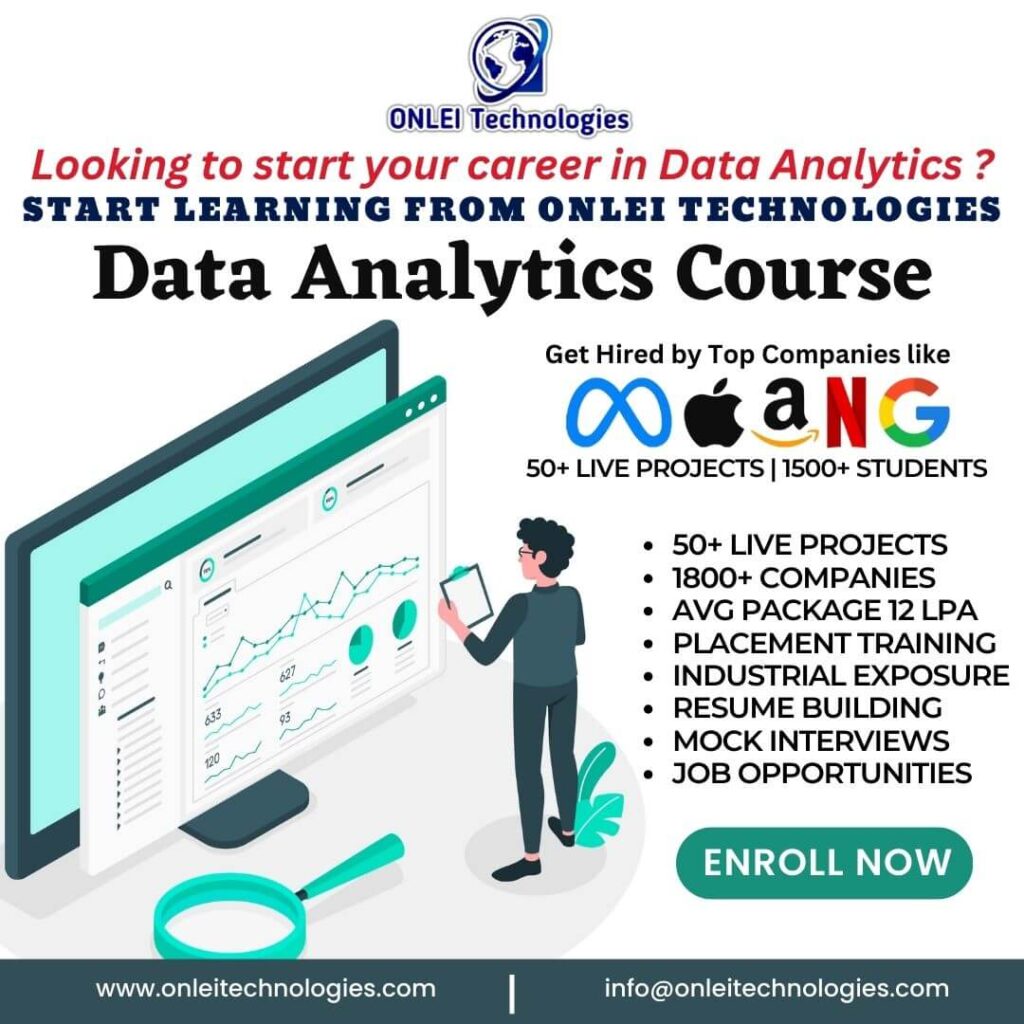
    There are many ways to learn data analytics, but practical, hands-on training is the most effective. ONLEI Technologies offers industry-oriented training programs designed to equip you with real-world skills. These programs often include:

    • Live projects
    • Case studies from real business scenarios
    • 1-on-1 mentorship
    • Placement assistance and resume building

    Practical exposure through internships and projects significantly increases your chances of landing a job.

    4. Build a Strong Portfolio

    Having a portfolio is one of the best ways to demonstrate your skills to potential employers. Here’s what your portfolio should include:

    • At least 3–5 diverse projects (e.g., sales data analysis, customer churn prediction, survey analysis)
    • Visual dashboards
    • GitHub repositories with well-documented code
    • Clear explanations of your process, insights, and recommendations

    A portfolio helps recruiters understand not just your technical knowledge but also your problem-solving approach.

    5. Optimize Your Resume

    Your resume should reflect your skills, projects, certifications, and achievements. Keep these tips in mind:

    • Use relevant keywords like “data analysis,” “SQL,” “data visualization,” etc.
    • Highlight your projects with metrics (e.g., “Improved sales forecasting accuracy by 15%”)
    • Include your tools and technologies under a “Skills” section

    A strong and tailored resume increases your chances of getting shortlisted.

    6. Practice Interview Questions

    Data analyst interviews typically include:

    • SQL queries (e.g., joins, subqueries, window functions)
    • Data interpretation tasks
    • Case studies or business problems
    • Technical questions on statistics and programming
    • Behavioral and situational questions

    Regular practice and mock interviews help you become more confident and articulate.

    7. Stay Updated and Network

    The field of data analytics evolves constantly. Subscribe to blogs, attend webinars, and engage in online communities like Kaggle and Reddit.

    Networking can open doors to job opportunities. Connect with professionals, attend meetups, and participate in discussions. Sometimes, a good referral is all it takes to get that interview call.

    8. Apply Strategically

    Rather than applying to hundreds of jobs blindly, focus on roles that align with your skills. Tailor your resume for each application, and don’t hesitate to reach out to recruiters directly with a short, professional message.

    Job platforms and company websites are great places to find open positions. Persistence is key—don’t be discouraged by rejections.

    9. Never Stop Learning

    Even after landing your first job, continue to enhance your skillset. New tools and techniques emerge frequently in data analytics. Lifelong learning is the secret to long-term success in this field.

    Platforms like ONLEI Technologies provide continuous support and advanced-level courses to help you grow from a beginner to an expert.

    Final Thoughts

    Cracking a data analytics job requires a mix of the right skills, strategic preparation, and a strong personal brand. Whether you’re a fresh graduate, a working professional looking to switch careers, or someone returning to the workforce, it’s never too late to begin.

    With the right guidance, such as that offered by ONLEI Technologies, and consistent effort, you can confidently step into the world of data analytics and build a rewarding career.

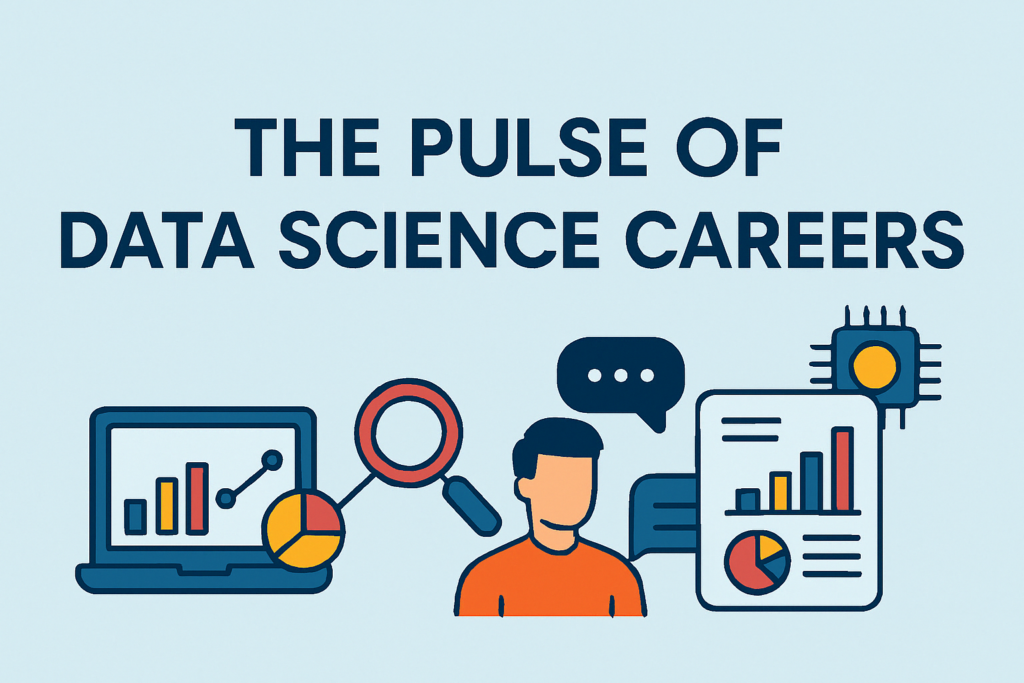
  • The Pulse of Data Science Careers

    In today’s digital-first world, data is more than just numbers—it’s the new oil fueling innovation, decision-making, and competitive advantage. With industries undergoing rapid digital transformation, the demand for skilled data professionals is rising at an unprecedented rate. From healthcare to finance, retail to entertainment, every sector is seeking individuals who can turn raw data into actionable insights. This dives into the heartbeat of the data science job market—its growth, opportunities, essential skills, and what aspiring professionals need to know to thrive.

    Why Data Science Is Booming

    The explosion of big data, IoT devices, and AI technologies has led to a seismic shift in how organizations operate. Every digital touchpoint—from a customer’s online purchase to a tweet—generates data. This has made data science not just relevant but essential.

    According to multiple industry reports, the global data science market is projected to grow exponentially in the coming years. Businesses are increasingly investing in data-driven strategies, and this shift has created a significant talent gap—meaning opportunities abound for those with the right skills.

    The Pulse of Data Science Careers

    Top Roles in the Data Science Ecosystem

    Data science is not a one-size-fits-all career path. It encompasses a wide range of roles, including:

    • Data Analyst – Interprets data and presents insights using visualization tools.
    • Data Scientist – Designs complex models and uses machine learning to make predictions.
    • Machine Learning Engineer – Focuses on building and deploying scalable ML algorithms.
    • Data Engineer – Creates and maintains the infrastructure for data generation and processing.
    • Business Intelligence Analyst – Translates data into business strategies using tools like Power BI or Tableau.

    Each role requires a slightly different blend of technical and analytical skills, but all revolve around one core objective: turning data into value.

    Skills That Make You Stand Out

    While the tools and platforms may change over time, some core competencies remain critical for success in data science:

    • Programming Knowledge – Python and R are the most widely used languages. SQL is essential for data querying.
    • Mathematics and Statistics – Understanding distributions, probability, and statistical testing is key.
    • Data Wrangling and Cleaning – Real-world data is messy. Knowing how to clean and structure data is a foundational skill.
    • Machine Learning & AI – Familiarity with supervised and unsupervised learning, deep learning, and model evaluation techniques.
    • Visualization – Communicating results effectively using tools like Matplotlib, Seaborn, or Tableau.
    • Cloud Platforms – Experience with AWS, Azure, or Google Cloud can provide an edge.

    Soft skills like communication, critical thinking, and problem-solving are also highly valued, especially when explaining complex findings to non-technical stakeholders.

    Industries Actively Hiring Data Scientists

    Data science is industry-agnostic. Some of the most active sectors include:

    • Finance & Banking – Risk modeling, fraud detection, algorithmic trading.
    • Healthcare – Predictive diagnostics, patient outcome modeling, genomics.
    • Retail & E-commerce – Customer segmentation, recommendation systems, inventory forecasting.
    • Manufacturing – Predictive maintenance, supply chain optimization.
    • Media & Entertainment – Audience analytics, content recommendation engines.

    Each industry presents unique challenges and datasets, which makes the field both dynamic and diverse.

    Entry Points for Newcomers

    For those just stepping into the world of data, the journey can seem daunting. However, there are multiple entry points depending on your background:

    • From Tech – If you have experience in software development or IT, transitioning into data engineering or ML roles can be smooth.
    • From Business – Analysts and project managers often move into business intelligence or data analytics roles.
    • From Academia – Researchers in math, physics, or economics frequently pivot to data science because of their strong statistical foundation.

    Project-based learning, internships, and contributing to open-source or real-world datasets (like those on Kaggle or GitHub) can accelerate the transition.

    Future Trends to Watch

    The field of data science is evolving rapidly. Here are a few trends shaping the future:

    • AutoML – Tools that automate parts of the modeling process, making data science more accessible.
    • Explainable AI (XAI) – Increased focus on transparency in AI-driven decisions.
    • Edge Computing – Moving data processing closer to where data is generated.
    • Ethical Data Science – Emphasis on fairness, accountability, and bias mitigation.
    • Multimodal Learning – Models that can process text, image, and audio simultaneously.

    Staying current with these trends through articles, research papers, and community discussions is crucial.

    Conclusion: A Career with Impact and Evolution

    A career in data science is more than just crunching numbers—it’s about solving real-world problems with creativity and logic. As data continues to shape our world, the role of data scientists and analysts will only become more pivotal.

    For those willing to learn continuously, embrace complexity, and think critically, data science offers a future-proof, fulfilling, and impactful career path.

  • Data Analytics The Career That’s Powering the Future of Work

    In a world overflowing with data, those who can make sense of the noise are quickly becoming some of the most valuable professionals on the planet. Data analytics has gone from being a niche skill to one of the most in-demand capabilities across industries—and the trend is only accelerating.

    From finance to healthcare, entertainment to e-commerce, organizations are waking up to the fact that data is not just a by-product of business—it is the business. The ability to interpret, visualize, and act on data is now central to everything from product development and customer experience to logistics and marketing strategy. This shift has sparked a global demand for data-literate professionals that shows no sign of slowing down.

    Why the Sudden Boom in Data Analytics Jobs?

    There are a few reasons why data analytics has become one of the hottest career paths today:

    1. Explosion of Data

    Every click, swipe, purchase, and interaction generates data. With the growth of digital platforms, smart devices, and social media, businesses are now collecting more data than ever before. But data alone isn’t useful unless it’s analyzed and understood. That’s where data analysts come in.

    2. Data-Driven Decision Making

    Gone are the days when decisions were made based solely on intuition. Today, companies rely heavily on analytics to guide strategic choices. Want to launch a new product? Data will tell you which market is most likely to respond. Want to improve customer retention? Analytics can help you understand churn patterns and customer behavior.

    3. A Need Across Every Industry

    Unlike some skills that are limited to specific sectors, data analytics is universal. Whether you’re working in sports, education, energy, or fashion, data plays a key role in helping organizations thrive. This versatility means there’s a growing demand for analytics talent everywhere—not just in tech companies.

    Data Analytics The Career That's Powering the Future of Work

    Top Careers in Data Analytics

    Here are some of the most popular and fast-growing roles in the field:

    • Data Analyst
      You’ll collect, process, and perform statistical analyses to help companies solve problems and make data-driven decisions.
    • Business Intelligence (BI) Analyst
      BI Analysts create dashboards and reports that visualize key performance metrics and support strategy development.
    • Data Scientist
      With a mix of coding, statistics, and domain expertise, data scientists build models and algorithms to predict outcomes and automate decision-making.
    • Marketing Analyst
      These professionals analyze market trends, customer preferences, and campaign performance to fine-tune marketing strategies.
    • Operations Analyst
      Focused on improving internal processes, operations analysts use data to streamline workflows, reduce costs, and enhance productivity.
    • Product Analyst
      By analyzing how users interact with digital products, these analysts help teams build better, more user-friendly features.

    Career Outlook & Salaries

    One of the most attractive aspects of a career in data analytics is the earning potential. Even entry-level roles often come with competitive salaries, and as you gain experience, the numbers climb rapidly. Senior analysts and data scientists frequently earn six-figure incomes, especially in major markets.

    What’s more, the career progression is dynamic. With a few years of experience, many professionals move into leadership roles, managing teams and driving strategy.

    And let’s not forget about job stability. As more companies invest in analytics capabilities, job security in this field remains strong—even during times of economic uncertainty.

    Global Opportunities & Remote Work

    The demand for data talent isn’t limited to any one country or region. Businesses around the world are seeking skilled analysts to support their growth, which means opportunities are truly global. Plus, many data roles can be done remotely, giving professionals the flexibility to work from anywhere.

    This flexibility has opened the door for people from diverse backgrounds and geographies to step into the analytics space, bringing fresh perspectives and ideas to the field.

    Do You Need a Technical Background? Not Necessarily.

    One of the most empowering aspects of data analytics is that it’s accessible. While having a background in math, statistics, or programming can help, it’s not a requirement. Many professionals come into data analytics from fields like finance, marketing, psychology, or business administration.

    With a learning mindset, curiosity, and the right foundational skills—like Excel, SQL, and data visualization—you can build a solid career in analytics. Over time, you can expand into more advanced tools and techniques such as Python, R, machine learning, and cloud platforms.

    The Bottom Line

    Data is now the currency of the digital economy, and those who know how to analyze it are in the driver’s seat. Whether you’re a student exploring future careers, a working professional looking to pivot, or someone simply curious about tech trends, data analytics offers a powerful, rewarding, and future-proof path.

    The job market is booming, the salaries are rising, and the doors are wide open. If you’ve ever considered a career that combines logic, creativity, and impact—data analytics might just be the perfect fit.

  • The Ultimate Data Science Interview Guide

    Becoming a Data Scientist is a lucrative career choice, but excelling in interviews requires thorough preparation. This guide will help you understand common interview questions and provide answers to help you succeed.

    1. Introduction to Data Science Interviews

    A Data Scientist is responsible for extracting insights from data using statistics, machine learning, and programming. Employers expect candidates to have expertise in Python, SQL, Machine Learning, Data Visualization, and Cloud Computing.

    The interview process generally includes:

    • Behavioral questions (to assess background and communication skills)
    • Technical questions (covering statistics, machine learning, and data manipulation)
    • Coding challenges (SQL and Python-based questions)
    • Case studies and business problems (real-world data applications)

    2. Common Data Science Interview Questions and Answers

    2.1 Tell Me About Yourself (Self-Introduction)

    Question: “Tell me about yourself.”

    Answer:

    “I am a dedicated Data Scientist with [X] years of experience in leveraging machine learning, statistical analysis, and big data tools to solve complex business problems. I have expertise in Python, SQL, and cloud-based data pipelines.

    In my previous role at [Company Name], I developed a predictive model that improved customer retention by 20%. I am passionate about uncovering actionable insights from data and continuously learning new techniques in AI and analytics.”

    2.2 Technical Questions

    Statistics & Machine Learning Questions

    🔹 What is the difference between supervised and unsupervised learning?

    • Supervised Learning: Uses labeled data (e.g., classification, regression)
    • Unsupervised Learning: Identifies patterns in unlabeled data (e.g., clustering, anomaly detection)

    🔹 What is overfitting and how can you prevent it?

    • Overfitting happens when a model learns noise instead of patterns.
    • Solutions: Cross-validation, regularization (L1/L2), pruning, and collecting more data.

    🔹 What is the bias-variance tradeoff?

    • High Bias: Model is too simple, leading to underfitting.
    • High Variance: Model is too complex, leading to overfitting.
    • The goal is to find a balance that minimizes total error.

    Programming & Data Manipulation Questions

    🔹 How do you handle missing data in a dataset?

    • Drop missing values (df.dropna() in Pandas)
    • Fill missing values using mean/median/mode (df.fillna())
    • Use predictive models to estimate missing values

    🔹 What are the different types of joins in SQL?

    • INNER JOIN: Returns matching rows from both tables
    • LEFT JOIN: Returns all rows from the left table and matching rows from the right
    • RIGHT JOIN: Returns all rows from the right table and matching rows from the left
    • FULL OUTER JOIN: Returns all rows when there is a match in either table

    🔹 Write a SQL query to find the second highest salary.

    SELECT MAX(salary) FROM employees

    WHERE salary < (SELECT MAX(salary) FROM employees);

    Data Science Case Study Questions

    🔹 How would you detect fraud in an online transaction system?

    • Use anomaly detection techniques like Isolation Forest, One-Class SVM, or unsupervised clustering (e.g., DBSCAN).
    • Extract features such as transaction amount, frequency, location, and user behavior.
    • Implement real-time fraud detection models using logistic regression, decision trees, or neural networks.

    🔹 How would you build a recommendation system for an e-commerce website?

    • Collaborative Filtering: Based on user behavior (e.g., Matrix Factorization, SVD)
    • Content-Based Filtering: Based on product features (e.g., TF-IDF, word embeddings)
    • Hybrid Model: Combining both approaches for better recommendations

    Behavioral Questions

    🔹 Describe a time when you worked on a difficult dataset.

    • Mention data inconsistencies, missing values, feature engineering, and how you cleaned and structured the dataset.

    🔹 How do you stay updated with new data science trends?

    • Mention platforms like Kaggle, Towards Data Science, Coursera, GitHub projects, and AI research papers.

    3. Coding Challenge Tips

    • Practice SQL and Python on platforms like LeetCode, HackerRank
    • Brush up on Pandas and NumPy for data manipulation
    • Understand time complexity (Big-O Notation) for coding problems
    • Write clean, optimized code with proper documentation

    4. Final Tips for Cracking the Data Science Interview

    ✅ Prepare a strong self-introduction 

    ✅ Master key ML, SQL, and Python concepts 

    ✅ Work on real-world projects and Kaggle competitions 

    ✅ Understand business applications of data science 

    ✅ Communicate insights effectively during case studies

    Conclusion

    Acing a Data Science interview requires both technical expertise and problem-solving skills. By mastering self-introduction, statistics, programming, case studies, and SQL queries, you can confidently secure your dream job.

    🚀 Best of luck with your interview!

  • The Power of Data Analytics in Today’s Business World

    In today’s fast-paced and ever-evolving business landscape, organizations across industries are increasingly relying on data analytics to stay ahead of the competition, improve decision-making, and enhance customer satisfaction. With the explosion of data generated by digital tools, platforms, and devices, companies have an unprecedented opportunity to leverage insights from data to drive innovation and achieve operational excellence.

    What is Data Analytics?

    At its core, data analytics involves examining raw data with the purpose of drawing meaningful conclusions, identifying trends, patterns, and relationships, and using this information to guide business decisions. Data analytics involves several steps, including data collection, data cleaning, data analysis, and the interpretation of results. The insights gained can inform strategies ranging from marketing to product development and customer service.

    Types of Data Analytics

    There are several types of data analytics, each serving a unique purpose:

    1. Descriptive Analytics: This type helps organizations understand past performance by analyzing historical data. By summarizing data, businesses can understand what has happened, identify trends, and recognize areas for improvement.
    2. Diagnostic Analytics: Going one step further than descriptive analytics, diagnostic analytics seeks to understand why something happened. It identifies the root causes of certain trends or issues by comparing different variables and factors.
    3. Predictive Analytics: This technique uses historical data and statistical algorithms to predict future trends. Predictive analytics is widely used in fields like finance, healthcare, and marketing, where anticipating future outcomes can lead to significant competitive advantages.
    4. Prescriptive Analytics: The final type focuses on recommending actions that businesses should take in response to insights from predictive analytics. By applying advanced algorithms and machine learning models, businesses can make more informed decisions to optimize performance and improve customer experiences.

    Applications of Data Analytics in Business

    Data analytics can be applied to a variety of business functions, helping organizations streamline operations and enhance their bottom line. Some key applications include:

    1. Customer Segmentation: By analyzing customer behavior and preferences, businesses can create targeted marketing strategies that resonate with specific segments, improving customer satisfaction and boosting sales.
    2. Supply Chain Optimization: Data analytics can help organizations better forecast demand, identify inefficiencies, and streamline logistics, ultimately reducing costs and enhancing supply chain efficiency.
    3. Financial Forecasting: With the help of data analytics, companies can better predict their financial performance, optimize budgeting processes, and mitigate risks associated with fluctuating market conditions.
    4. Fraud Detection: Data analytics techniques are often employed in industries like banking and insurance to detect fraudulent activity. By analyzing transactional data for unusual patterns, businesses can reduce the likelihood of financial losses.
    5. Product Development and Innovation: By analyzing customer feedback, preferences, and market trends, businesses can identify gaps in the market and develop products that meet customer needs more effectively.

    Challenges in Implementing Data Analytics

    While the potential benefits of data analytics are significant, organizations must overcome several challenges to fully leverage its power. These challenges include:

    1. Data Quality and Availability: For data analytics to be effective, businesses need clean, reliable, and complete datasets. Poor data quality can lead to inaccurate insights, which can negatively impact decision-making.
    2. Skilled Workforce: Analyzing data requires a team of skilled professionals, including data scientists, analysts, and engineers, who are proficient in the latest analytical tools and techniques. Finding and retaining such talent is a challenge for many companies.
    3. Data Security and Privacy Concerns: As organizations collect vast amounts of sensitive data, they must be mindful of data security and privacy regulations. Failure to protect customer data can lead to legal consequences and damage to a company’s reputation.
    4. Integration with Existing Systems: Integrating data analytics tools with legacy systems can be a complex and costly process. Businesses may need to invest in new technologies and infrastructure to fully capitalize on data analytics.

    Conclusion

    The role of data analytics in today’s business environment is undeniable. Companies that harness the power of data to make informed, data-driven decisions are well-positioned to outpace their competitors and achieve long-term success. As the volume of data continues to grow, the importance of leveraging analytics to uncover hidden insights will only increase. By understanding the various types of analytics and their applications, organizations can begin to unlock the full potential of their data and drive significant business value.

  • The Power of Data Science

    Introduction

    In an era driven by information, data science has emerged as a game-changer across industries. It bridges the gap between raw data and meaningful insights, enabling organizations to make informed decisions. From optimizing business operations to predicting future trends, data science is reshaping the way the world functions.

    Understanding Data Science

    At its core, data science is an interdisciplinary field that combines statistics, mathematics, and computer science to analyze complex datasets. By leveraging advanced techniques such as machine learning, artificial intelligence, and predictive modeling, data scientists extract valuable patterns and trends from vast amounts of data.

    The process typically involves data collection, cleaning, analysis, and visualization. These steps ensure that raw data is transformed into actionable insights, allowing businesses and institutions to make data-driven decisions with precision.

    Key Components of Data Science

    1. Data Collection and Preprocessing
      The first step in any data science project is gathering and preparing data. This involves collecting data from various sources such as databases, APIs, and sensor devices. Since raw data often contains errors or inconsistencies, preprocessing techniques such as data cleaning and normalization are crucial to improving accuracy.
    2. Exploratory Data Analysis (EDA)
      Before building predictive models, data scientists perform EDA to understand data distributions, relationships, and patterns. Techniques like visualization, correlation analysis, and statistical summaries help uncover hidden insights that drive decision-making.
    3. Machine Learning and Artificial Intelligence
      Data science incorporates machine learning algorithms to create predictive models. These models enable systems to learn from historical data and make accurate predictions. Whether it’s recommendation engines, fraud detection, or sentiment analysis, machine learning plays a crucial role in automating decision-making processes.
    4. Big Data and Cloud Computing
      With the exponential growth of data, traditional computing methods are often insufficient. Big data technologies and cloud computing platforms provide scalable solutions for storing, processing, and analyzing massive datasets. These technologies ensure that businesses can efficiently handle data-intensive tasks in real time.
    5. Data Visualization and Interpretation
      Communicating insights effectively is a key aspect of data science. Visualization tools such as dashboards, graphs, and charts help translate complex findings into intuitive representations. Decision-makers rely on these visualizations to understand trends, forecast outcomes, and develop strategic plans.

    Applications of Data Science

    Data science is revolutionizing multiple industries by driving innovation and efficiency. Some of the most impactful applications include:

    • Healthcare: Predictive analytics in healthcare helps in disease diagnosis, patient monitoring, and treatment recommendations.
    • Finance: Risk assessment, fraud detection, and algorithmic trading are powered by data-driven models.
    • Retail and E-commerce: Personalized recommendations and demand forecasting enhance customer experiences and optimize inventory management.
    • Manufacturing: Predictive maintenance reduces downtime and improves production efficiency.
    • Transportation and Logistics: Route optimization and demand prediction streamline operations for logistics companies.

    Future of Data Science

    As technology evolves, data science continues to push boundaries. Emerging trends such as deep learning, quantum computing, and ethical AI are shaping the future of this field. Additionally, the growing importance of data privacy and responsible AI ensures that data-driven solutions are both effective and ethical.

    With organizations increasingly relying on data-driven strategies, the demand for skilled professionals in this field is rising. Those who embrace data science and its innovations will be at the forefront of technological transformation in the years to come.

    Conclusion

    Data science is not just a field of study—it is a powerful tool that drives progress across industries. By harnessing the power of data, businesses and institutions can make smarter decisions, enhance efficiency, and create meaningful impacts. As technology continues to evolve, data science will remain a driving force in shaping the future of the digital world.

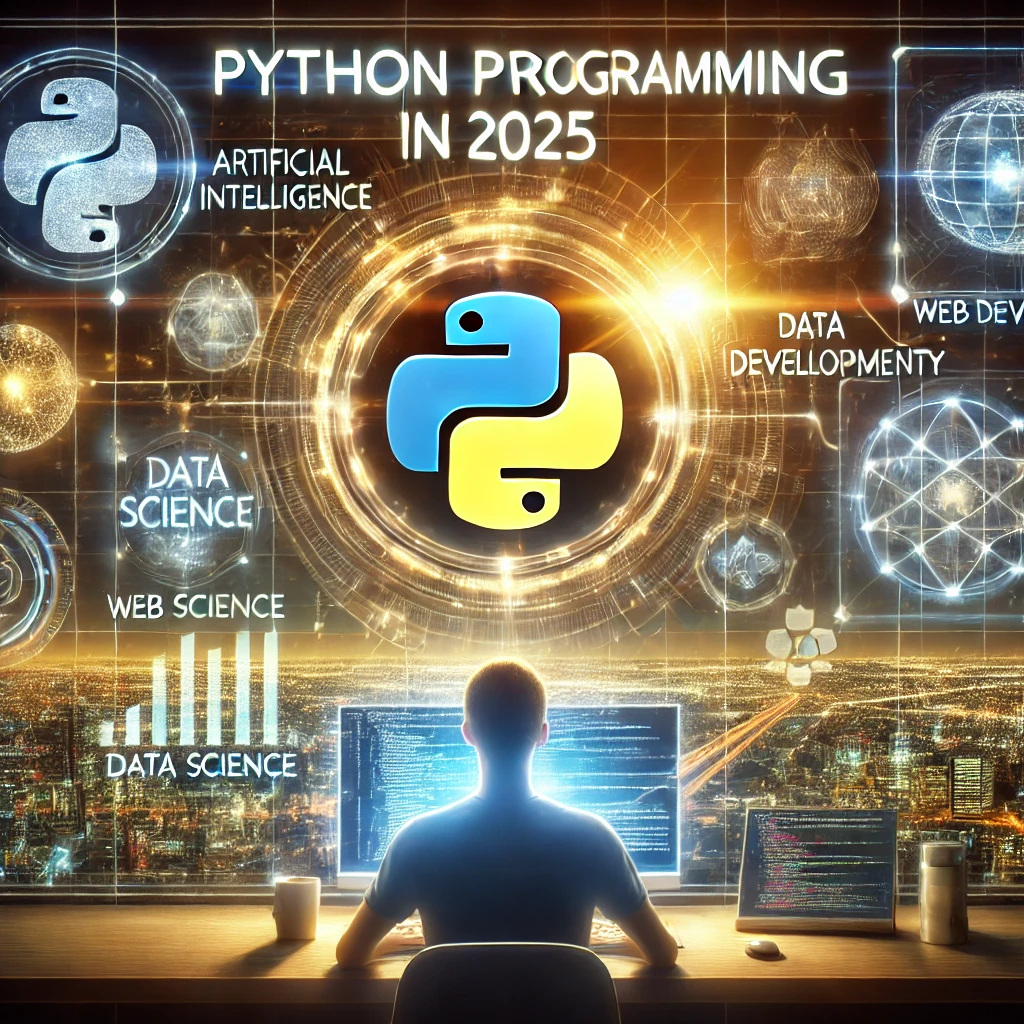
  • The Importance of Python Programming in 2025

    Introduction

    Python has solidified its position as one of the most versatile and widely used programming languages in the world. With advancements in technology, artificial intelligence, data science, and web development, Python continues to be a crucial skill for developers, engineers, and researchers. In 2025, Python’s relevance remains stronger than ever, driving innovation across multiple industries.

    Why Python Remains Dominant

    Python’s popularity is attributed to its simplicity, readability, and extensive library support. It has become the preferred language for various domains due to:

    1. Ease of Learning and Use – Python’s syntax is beginner-friendly, making it an ideal choice for new programmers.
    2. Versatility – It is used in web development, automation, artificial intelligence, and more.
    3. Large Community and Support – A vast community of developers continuously contributes to its growth and improvement.
    4. Extensive Libraries and Frameworks – Libraries like TensorFlow, NumPy, and Django make Python indispensable in various fields.
    5. Cross-Platform Compatibility – Python runs seamlessly on multiple operating systems, including Windows, macOS, and Linux, making it a preferred choice for developers.
    6. Integration with Other Technologies – Python can be easily integrated with other programming languages such as C, C++, and Java, increasing its usability in various projects.

    Key Applications of Python in 2025

    1. Artificial Intelligence and Machine Learning

    Python remains the primary language for AI and ML development. Libraries like TensorFlow, PyTorch, and Scikit-learn are widely used for building intelligent systems. AI-driven automation and robotics are also heavily dependent on Python for their algorithmic implementations.

    2. Data Science and Analytics

    With the rise of big data, Python’s Pandas and NumPy libraries provide robust tools for data manipulation and analysis. Businesses leverage Python to make data-driven decisions. Additionally, visualization tools like Matplotlib and Seaborn enhance data representation, making it easier for analysts to interpret results.

    3. Web Development

    Frameworks like Django and Flask continue to power dynamic and secure web applications. Python’s efficiency in backend development makes it a top choice. Full-stack developers also use Python-based frameworks such as FastAPI for high-performance applications.

    4. Cybersecurity

    Python is used extensively in ethical hacking and security applications. Tools like Scapy and PyCrypto help professionals in penetration testing and encryption. As cybersecurity threats continue to evolve, Python’s adaptability makes it crucial for developing security protocols and defensive mechanisms.

    5. Automation and Scripting

    Python simplifies repetitive tasks through automation, making it a valuable tool for system administrators and developers. It is widely used in DevOps for scripting and process automation, improving workflow efficiency in various industries.

    6. Internet of Things (IoT)

    Python plays a significant role in IoT applications by enabling communication between smart devices and cloud services. Frameworks like MicroPython allow developers to create embedded systems and sensor-based automation solutions.

    7. Game Development

    Although not as dominant as C++ in gaming, Python still plays an essential role in game development. Libraries like Pygame allow developers to build 2D games, while AI-driven gaming experiences rely on Python for backend computations.

    8. Blockchain and Cryptocurrency

    With the rise of decentralized applications and digital currencies, Python is widely used for blockchain development. Libraries like Web3.py provide tools for creating smart contracts and integrating blockchain solutions.

    Future of Python

    Python’s influence will continue to grow in emerging technologies such as blockchain, quantum computing, and augmented reality. Companies and developers investing in Python today will be well-equipped to handle future advancements. Additionally, its adoption in the education sector ensures that upcoming generations of programmers are proficient in Python, further strengthening its dominance.

    Python in the Education and Research Sector

    Python has become a fundamental programming language in education, particularly in computer science, engineering, and mathematics. Researchers prefer Python for its ability to handle complex computations, simulations, and modeling, making it indispensable in scientific research.

    Python in Business and Enterprise Solutions

    Many businesses use Python for process automation, customer relationship management (CRM), and enterprise resource planning (ERP). With the integration of AI and big data analytics, Python is becoming a core technology in decision-making and business intelligence.

    Conclusion

    As we progress into 2025, Python remains a powerful and indispensable language in the tech industry. Whether for AI, web development, cybersecurity, or emerging technologies, Python’s adaptability and ease of use make it an essential tool for modern-day programming. Its role in education, research, and business further solidifies its importance. Learning Python in 2025 is not just beneficial; it is a necessity for anyone looking to thrive in the digital era.