Day: November 25, 2022

  • Does It Matter If I Use HTML Or CSS?

    Hi Everyone , Our Today’s Topic is Does It Matter If I Use HTML Or CSS ?

    “Web Designing has a vast scope with the booming IT industry not in India but also abroad”.

    What is Web development & Web Design ?

    The difference between web design vs. web development is the focus. Web design focuses on creating a website’s look and feel via design tools while web development focuses on bringing that look and feel to life via programming languages.

    Web design

    Web design focuses on creating different graphical elements for online use. Designers may create infographics, ads, logos…but a large focus — and the focus of this video — is on the visual look and feel of a website. 

    Some things web designers generally do are:

    • Wireframe design prototypes
    • Create homepages, inner pages, and landing pages
    • Work with developers and project managers to build and redesign websites

    When they work on websites, designers typically focus on how they can create a good user experience (UX) for site visitors.  

    Web development definition

    So while web designers focus on the visuals of a website, web developers work on bringing those visuals to life. 

    They’ll use different programming languages, like HTML, PHP, and Java, to develop a website’s core functionality. Functionality might be things like what happens when someone clicks a button or how the main navigation loads when a user scrolls or clicks on it. 

    A developer may work with a content management system (CMS) to get your website online and available to users. Some common systems include:

    • WordPress
    • Magento
    • Joomla
    • Drupal

    A good portion of a web developer’s work is also focused on maintaining websites, so doing things like upgrading the CMS, managing the security, and offering web support for any issues that arise. 

    ONLEI Technologies Provides Best Online Web Development Training , Best Online Web Development Course in India .
    Does It Matter If I Use HTML Or CSS?

    Best Online Web Development Training

    ONLEI Technologies provides Best Online Web Development Training . Looking for a Web Development Course with Live Projects by Experts ? No Worries, We are here to Help you .

    ONLEI Technologies Real Time Web Development by 6+ Years Experienced Industry Experts . We also offer students with the essential skills and training in web designing courses to enter and prosper in the dynamic world of web design .

    HTML and CSS are the two fundamental languages for building any website. What’s the difference?

    What does HTML stand for?

    HTML stands for Hypertext Markup Language. Think of HTML as the skeleton of the document. The HTML is what gives structure to the site. This is done through tags, elements, and attributes. Whether you want headings, lists, images, or links, HTML can do all of that.

    Let’s start with basic HTML Structure. 

    <html>

    <head>

        <!– Information about the page –>

        <!–This is the comment tag–>

        <title>ONLEI Technologies</title>

    </head>

    <body>

        <!–Contents of the webpage–>

    </body>

    </html>

    What is CSS?

    Cascading Style Sheets (CSS) is a code language used to describe the look and formatting of another document (in our case a web page written using html). Without CSS your site would be a white page with text stripped of all other formatting. CSS is useful as it separates content from presentation elements, such as layout, colors, and fonts.

    Link CSS to HTML

    The relationship between HTML as well as CSS is set with the ‘rel’ HTML and CSS

    <link rel = “stylesheet” type=”text/css” href=”main.css”/>

    Alternatively, CSS can be linked using font-family property or a text editor changing the font –

    H1 {

    Font-family: Arial

    }

    Is HTML & CSS Enough To Create Websites ?

    So, is HTML and CSS enough to create a website? The short answer is yes, you can build a simple website with just HTML and CSS. However, if you want to start building some really cool websites, and have more flexibility in what you can do, you need to use JavaScript, a backend language, web hosting, and databases. With these domains, you can build anything you want on the web!

    There are several Web Hosting providers. For example, AccuWeb Hosting provides all hosting services like shared hosting, VPS hosting, Dedicated hosting, etc.

    Why Are HTML And CSS Enough To Create A Website?

    HTML is the code that is used to structure a web page and its content. That means that any text, images, forms, links, and buttons you see on a website are generated with HTML.

    CSS is the language you use to style a webpage. It is how you change aspects such as the size, color, and positioning of the elements listed above.

    With these two languages combined, you have more than enough tools to build a simple one-page landing page or a business website. If you have information that you want to get across to a potential visitor, and that content never changes and there are no additional actions your user needs to take, you do not need anything else to build a basic website.

    Best Online Web Development Course in India

    This Web development Training in India helps students develop technical, creative and can design websites which can lead to a career in web design & Web development . We are one of the best Web Development Institute in India.

    Get the best Web Development Training in India by India’s leading Web Development Institute . All our Web Development Training Experts are Industry experts and love to share their practical knowledge with the students .

    Our Web Development Experts understand the fresher’s & working professional’s requirements very well. We offer Web Development Classroom Training and Web Development Online Training.

    Best Web Development Training Institute in India

    ONLEI Technologies Provide Job Oriented Web Development Course in India from Experts with 100% Placement assistance . Our Web Development Course Curriculum includes HTML & HTML5, CSS3, Javascript, JQuery, Bootstrap, React JS, Redux, Node JS, MongoDB, Express.

    Important Links

    Home Page 

    Courses Link  

    1. Python Course  
    2. Machine Learning Course 
    3. Data Science Course 
    4. Digital Marketing Course  
    5. Python Training in Noida 
    6. ML Training in Noida 
    7. DS Training in Noida 
    8. Digital Marketing Training in Noida 
    9. Winter Training 
    10. DS Training in Bangalore 
    11. DS Training in Hyderabad  
    12. DS Training in Pune 
    13. DS Training in Chandigarh/Mohali 
    14. Python Training in Chandigarh/Mohali 
    15. DS Certification Course 
    16. DS Training in Lucknow 
    17. Machine Learning Certification Course 
    18. Data Science Training Institute in Noida
    19. Business Analyst Certification Course 
    20. DS Training in USA 
    21. Python Certification Course 
    22. Digital Marketing Training in Bangalore
    23. Internship Training in Noida
    24. ONLEI Technologies India 
  • What is Exploratory Data Analysis in Data Science ?

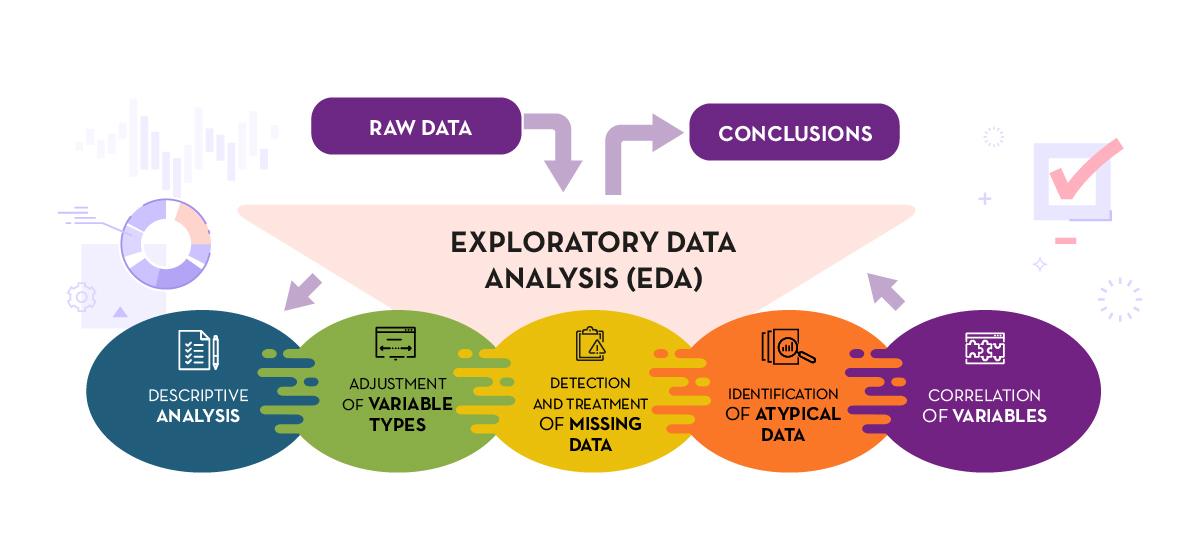
    Exploratory data analysis in Data Science (EDA) is a (mainly) visual approach and philosophy that focuses on the initial ways by which one should explore a data set or experiment. Two main aspects of EDA are:

    1. Openness, meaning a person exploring the data should be open to all possibilities prior to its exploration.
    2. Skepticism, meaning one must ensure that the obvious story the data tells is not misleading.

    Exploratory Data Analysis in Data Science

    There is no formal set of techniques that are used in EDA (Exploratory Data Analysis in Data Science) . Remember, EDA is an approach to how we analyze data, not a specific set of methods set in stone. It’s a philosophy and art more so than a science.

    Exploratory Data Analysis in Data Science

    Exploratory Data Analysis in Data Science : Its purpose is to take a general view of some given data without making any assumptions about it. We are trying to get a feel for the data and what it might mean, as opposed to reject or accept some sort of premise around it, before we begin its exploration.

    In other words, with EDA we let the data speak for itself instead of trying to force the data into some sort of predetermined model.

    Nevertheless, some techniques are used to help us get a feel for the data. For instance, we can categorize data, quantify some of its basic aspects, or visualize it.

    For instance, raw data can be plotted using histograms or other visualization techniques. Sometimes, the data is juxtaposed in a manner that helps us spot important patterns within or between data sets.

    Overall, EDA can help us:

    • Catch mistakes
    • Gain new insights
    • Detect outliers
    • Test assumptions
    • Identify important factors in the data
    • Understand relationships

    And perhaps, most importantly, EDA is used to help figure out our next steps with respect to the data. For instance, we might have new questions we need answered or new research we need to conduct.

    The term “exploratory analysis” refers to methods used to analyze data without having a specific hypothesis in mind. Often this type of analysis is referred to as exploratory because it gives you the flexibility to look at data without knowing exactly how it is going to be analyzed. For example, if you want to find out whether there are differences between men and women, you could compare the ages of people in each gender group. If you don’t know about any potential differences, you’ll have no way of knowing if you’re seeing something significant or just random noise.

    For a general overview of data analysis, have a look at our Data Science Training in Noida if you’re interested in learning more. You can develop your data science and analytics skills with the aid of ONLEI Technologies.

    What is the importance of exploratory data analysis in data science ?

    Exploratory Data Analysis in Data Science : One of the most fundamental abilities you need to acquire to become a data scientist is exploratory data analysis (EDA), which is also known as descriptive statistics. This collection of abilities enables you to recognise patterns and interpret what you view. It can assist you in deciding whether you should continue gathering data or whether you currently have sufficient data to make informed decisions. EDA can be used to determine the degree of variation present within a dataset and the degree of independence or correlation between the values of various variables.

    You can utilize EDA to make sure you’re asking the proper questions and that your findings are pertinent to the business outcome you’re aiming for. EDA can be used, for instance, to determine whether the number of consumers that purchase a certain product each month correlates with the number of salespeople employed by the division that sells those products. If you discover that the statistics are connected, you might draw the conclusion that increasing the number of salespeople will boost overall sales.

    After completing EDA, you can begin creating predictive models with more sophisticated tools like regression models, clustering algorithms, and decision trees. With the help of these methods, you can discover correlations between various variables, forecast future trends, and even automate some procedures.

    Why Exploratory Data Analysis in Data Science ?

    Exploratory data analysis in data science has a number of advantages, including:

    • By extracting averages, means, lowest and maximum values, etc., you may better comprehend variables.
    • Analyze the data to find errors, outliers, and missing numbers.
    • By displaying data in graphs like box plots, scatter plots, and histograms, you can spot trends.

    Therefore, the primary objective is to better grasp the data and use tools efficiently to derive insightful or conclusive findings.

    Exploratory data analysis in data science uses a variety of methodologies and strategies to help you understand your data better. When you do this, you may discover patterns or insights that you might have overlooked if you had simply employed analytical tools. This kind of data analysis is crucial because it can make it easier for you to understand your data and spot problems that need to be fixed. Exploratory data analysis should therefore be a part of your data science workflow.

    Important Links

    Home Page 

    Courses Link  

    1. Python Course  
    2. Machine Learning Course 
    3. Data Science Course 
    4. Digital Marketing Course  
    5. Python Training in Noida 
    6. ML Training in Noida 
    7. DS Training in Noida 
    8. Digital Marketing Training in Noida 
    9. Winter Training 
    10. DS Training in Bangalore 
    11. DS Training in Hyderabad  
    12. DS Training in Pune 
    13. DS Training in Chandigarh/Mohali 
    14. Python Training in Chandigarh/Mohali 
    15. DS Certification Course 
    16. DS Training in Lucknow 
    17. Machine Learning Certification Course 
    18. Data Science Training Institute in Noida
    19. Business Analyst Certification Course 
    20. DS Training in USA 
    21. Python Certification Course 
    22. Digital Marketing Training in Bangalore
    23. Internship Training in Noida
    24. ONLEI Technologies India 
  • What is Health Care Data Analytics ?

    Hello Everyone , So today we will let you know about Importance of Health Care Data Analytics or What is Health Care Data Analytics . Can big data save lives? Advocates of the emerging field of health care analytics certainly believe it can.

    Big data analytics is transforming the way organizations do business in dozens of industries. But the impact may ultimately be most profound in the field of medicine, where advanced health care analytics holds the potential to revolutionize patient care.

    Health Care Data Analytics

    Big data is already having positive effects on many areas of health care, including:

    • Advancements in telemedicine
    • Enhanced patient engagement
    • Wearables that provide real-time alerts
    • Disease prevention/population health
    • Improving/refining treatment standards
    • Potential to help cure diseases
    • Improved staffing efficiency
    • Prevention of opioid abuse

    As the nation’s top technology innovators partner with health care organizations to leverage valuable insights from the immense amount of healthcare data being generated and collected each day, the search is on for new ways to transform rapidly expanding databases into improved outcomes for patients and entire populations.

    Types of Data Analytics 

    Understanding the analytics progression and starting in the right place will help to guarantee success with advanced analytics and lead to AI utilization.

    There are four types of analytics, Descriptive, Diagnostic, Predictive, and Prescriptive. The chart below outlines the levels of these four categories. It compares the amount of value-added to an organization versus the complexity it takes to implement.

    The idea is that you should start with the easiest to implement, Descriptive Analytics. In this blog, we will review the four analytics types and an example of their use cases, and how they all work together.

    Descriptive Data Analytics revolves around data and findings related to what has happened already in the past. It does not involve making any inferences or predictions with the data. It is rather a type of analytics that forms the base for further analysis and other types of data analysis. It basically involves collecting historical data and presenting the data in an organized manner for easy understanding. Very basic levels of statistical methods such as average, percentage change calculations, Mean etc. are used in Descriptive Analytics.

    Predictive Analytics is the type of data analysis where probabilities are used to forecast possible future events and outcomes. In predictive analytics, complex statistical techniques are used to predict the outcomes. For example- Statistical Data Modeling, Data Mining etc. Predictive Analytics is rather a step towards Machine Learning and Artificial Intelligence which involve predictive models. 

    Prescriptive Analytics is the stage in data analysis where the learnings from Descriptive and Predictive Analytics are used to suggest the best actionables for the business problem or challenges. This type of data analytics uses rather complex statistical tools and techniques to figure out the right course of action. Complex algorithms based on internal as well as external data are used to achieve the results. Because of this reason, Prescriptive Analytics is not a routine practice adopted by organizations as it requires specialized tools and statistical processes.

    What is the future of health care data analytics?

    Technology and digital transformation define the future healthcare. As more and more patient and clinical data is collected, healthcare organizations will be able to expand their knowledge and take action to improve patient experiences and, ultimately, health outcomes. Thus, new digital technologies that utilize healthcare analytics are being developed with the goal of improving global health.

    What role does the government play in Health Care Data Analytics?

    The government plays an important role in healthcare analytics. Concerns over how healthcare organizations gather, store, share, and use personal information have prompted numerous pieces of legislation at the federal and state level in order to protect patient privacy.

    In 1996, President Bill Clinton signed the Health Insurance Portability and Accountability Act (HIPAA) to ensure data confidentiality and security for medical information. Title II of HIPAA also requires healthcare organizations to secure their electronic access to health data and remain compliant with privacy regulations. More recently, the Office of the National Coordinator for Health Information Technology (ONC) issued the Federal Health IT Strategic Plan 2015-2020 to protect the privacy and security of health information and increase public confidence in the safety of health IT.

    Organizations that carry out healthcare analytics must comply with these regulations to, first and foremost, function legally, but also to prioritize patient data security. The information used in health analytics is personal and oftentimes sensitive in nature. It is therefore of extreme importance that healthcare organizations performing health analytics attend to the legislation surrounding their operations.

    Important Links

    Home Page 

    Courses Link  

    1. Python Course  
    2. Machine Learning Course 
    3. Data Science Course 
    4. Digital Marketing Course  
    5. Python Training in Noida 
    6. ML Training in Noida 
    7. DS Training in Noida 
    8. Digital Marketing Training in Noida 
    9. Winter Training 
    10. DS Training in Bangalore 
    11. DS Training in Hyderabad  
    12. DS Training in Pune 
    13. DS Training in Chandigarh/Mohali 
    14. Python Training in Chandigarh/Mohali 
    15. DS Certification Course 
    16. DS Training in Lucknow 
    17. Machine Learning Certification Course 
    18. Data Science Training Institute in Noida
    19. Business Analyst Certification Course 
    20. DS Training in USA 
    21. Python Certification Course 
    22. Digital Marketing Training in Bangalore
    23. Internship Training in Noida
    24. ONLEI Technologies India 
  • Data Science in Telecom Sector

    Hi Everyone , Our today’s topic is Data Science in Telecom Sector . So Here we are going to learn more about Data Science .

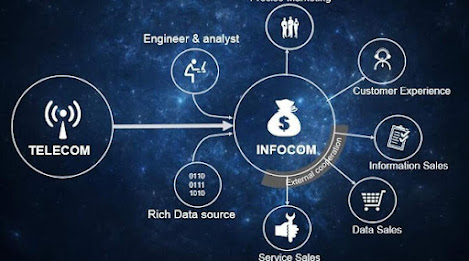
    Data science can help us predict the future and make better, data-driven decisions. With the use of real-time and predictive analytics, telecom companies can use data collected by their devices to build forecasts and gain insight into what they can do to improve operations. By leveraging big data in telecom, companies can analyze real-time data to identify the source of fraudulent transactions and correlate those with historical activity to prevent future counterfeit actions.

    Data Science in Telecom Sector

    What is Data Science in Telecom Sector Networking ? 

    Networking deals with wired as well as wireless networks whereas Data Science requires expertise in mathematics, statistics and computer science disciplines and uses techniques such as machine learning, data mining, data storing and visualization . A network is a collection of different connected objects. These objects present which are called a nodes or vertices. We draw a line to connect different object which are called edges. Different nodes connected with objects using edges and which can connect multiple objects.

    Big Data can help gather real-time customer satisfaction information through social media listening or Voice of the Customer analysis. It can also improve customer experience by identifying the most valuable customers who would benefit from dedicated treatment and better services . 

    How AI can Help Telecom Industry ? 

    Sophisticated AI algorithms and machine learning is used in telecom Industries to predict future results. The managers and operators can utilize the potential of data-driven facts, insight which helps in decision making. It reduces the problems with hardware, cell towers, and power lines.

    One of the most common IoT Telecom use cases is asset management and remote system monitoring. By using an IoT platform like Kaa, telecom companies can connect their diverse physical assets to the cloud and remotely manage their operations, investigate malfunctions, run firmware upgrades, and keep track of inventory.

    Importance of Data Science in Telecom Sector

    The importance of data science is based on the ability to take existing data that is not necessarily useful on its own and combine it with other data points to generate insights an organization can use to learn more about its customers and audience

    Some of the most important technical data scientist skills are: Statistical analysis and computing. Machine Learning. Deep Learning.

    By leveraging big data in telecom, companies can analyze real-time data to identify the source of fraudulent transactions and correlate those with historical activity to prevent future counterfeit actions.

    Important Links

    Home Page 

    Courses Link  

    1. Python Course  
    2. Machine Learning Course 
    3. Data Science Course 
    4. Digital Marketing Course  
    5. Python Training in Noida 
    6. ML Training in Noida 
    7. DS Training in Noida 
    8. Digital Marketing Training in Noida 
    9. Winter Training 
    10. DS Training in Bangalore 
    11. DS Training in Hyderabad  
    12. DS Training in Pune 
    13. DS Training in Chandigarh/Mohali 
    14. Python Training in Chandigarh/Mohali 
    15. DS Certification Course 
    16. DS Training in Lucknow 
    17. Machine Learning Certification Course 
    18. Data Science Training Institute in Noida
    19. Business Analyst Certification Course 
    20. DS Training in USA 
    21. Python Certification Course 
    22. Digital Marketing Training in Bangalore
    23. Internship Training in Noida
    24. ONLEI Technologies India