Category: Uncategorized

  • Is ONLEI Technologies Institute the best or not for Summer Internship Training ?

    We have faced Questions Like this Is ONLEI Technologies Institute the best or not for Summer Internship Training? So Please read this blog to know more

    With the advent of technology and systems, competition today is greater than ever. In today’s world, the business environment requires constant technological improvements to meet the demands of the industry.

    Summer training is one of the best ways to spend free time for engineering students or students pursuing a graduate/post-graduate degree in computer science. Summer training is important because students have time to learn and acquire knowledge that will improve their computer skills. 

    Participating in summer internships will help students spend their free time doing things in a technical way. You will also discover different methods of summer training. You can take summer training as a fun part of your business if you are a technology lover. Without the busy schedule of college and teaching, you’ll be able to use your imagination and develop valuable skills. 

    Enrolling in summer training will help you explore other options. It will also help you better understand where your technical interests lie.

    Everytime when we are about to go for Summer Internship Training one question arises: 

    • Which institute to go for Internship Training ? 
    • Which institute certificate will enhance my CV ?
    • Is it worth going for that particular institute ?
    • Will they provide industry based training ?

    For all your questions and confusions here we are to resolve 

    ONLEI Technologies provide the best Summer Internship Training.

    ONLINE SUMMER TRAINING

    As a part of the college curriculum every student has to go for summer training. The benefits of online summer training :

    Flexibility

    Many people are turning to online learning for its flexibility. Learning almost anywhere allows you or your teammates to attend classes without going to medical school. Although some online courses require students to attend live lectures, you can fit your classes into your busy schedule and progress in your career.

    Ability to Advance Career 

    In the ONLEI Technologies survey, career advancement was the biggest motivation for respondents to continue their education. This is also true of online learning more broadly. Career advancement can include promotion or training, getting a promotion or pay raise, or changing job fields. Since e-learning is a flexible option, this method appeals to working professionals looking for career opportunities.

    Wider Range of Courses and Programs

    One of the first rate benefits of online mastering is that specialists can study from colleges round the sector and locate this system that first-class meets their wishes without uprooting their lives. In contrast, the ones reading on campus are confined to nearby alternatives or have to circulate to any other metropolis for a full-time program. Many renowned, well-hooked up universities now provide online classes. This gives an extra span of alternatives that will help you attain your desires or teach your staff.

    Affordability

    Overall, on-line software charges vary, however with a much broader variety of services and forms of credentials comes a much broader variety of fee points. You can pick a web software that now no longer meets your expert desires however additionally that suits inside your fee variety. Generally, you’ll store cash that might in any other case be spent on housing and commuting to campus every day. Your organization can also be inclined to pay for your schooling or reimburse you for lessons in case your software aligns together with your modern-day or destiny responsibilities.

    Time Management Skill Development

    In all regions of existence, handling it slowly is an essential talent. You might also additionally juggle your circle of relatives and private duties together along with your expert responsibilities—alongside the whole lot else existence throws your way. As an expert in a web direction, you’re probably balancing your activity together along with your schooling. This calls for you to devise beforehand and possibly smash your assignments into smaller chunks. Knowing the way to control it slowly is a talent to be able to serve you nicely withinside the lengthy term.

    Virtual Collaboration Opportunities

    Especially as COVID-19 persists and lots of experts hold to paintings remotely, digital collaboration abilities are extra essential than ever. Completing a web direction or software teaches those precious abilities as you’ll collaborate on organization paintings, have interaction in stay and offline discussions, and examine viewpoints from classmates primarily based totally worldwide. This is likewise essential as many companies, massive or small, lease groups with personnel throughout the globe, and running with humans throughout diverse time zones can be a part of your activity.

    ONLEI Technologies Summer Internship Benefits 

    • Experts from Industry
    • Certificate of Completion with Verification ID
    • Internship Letter 
    • Project Letter
    • LIVE Projects
    • Get 1 Year Membership
    • Industrial Exposure 
    • Students Referral Bonus
    • Flexible Batch Timings
    • Minimum Batch Size
    • Study Material
    • Interview Preparation
    Summer Internship Training

    Who can join Internship Training ?

    S.No.DepartmentsTechnologiesDuration
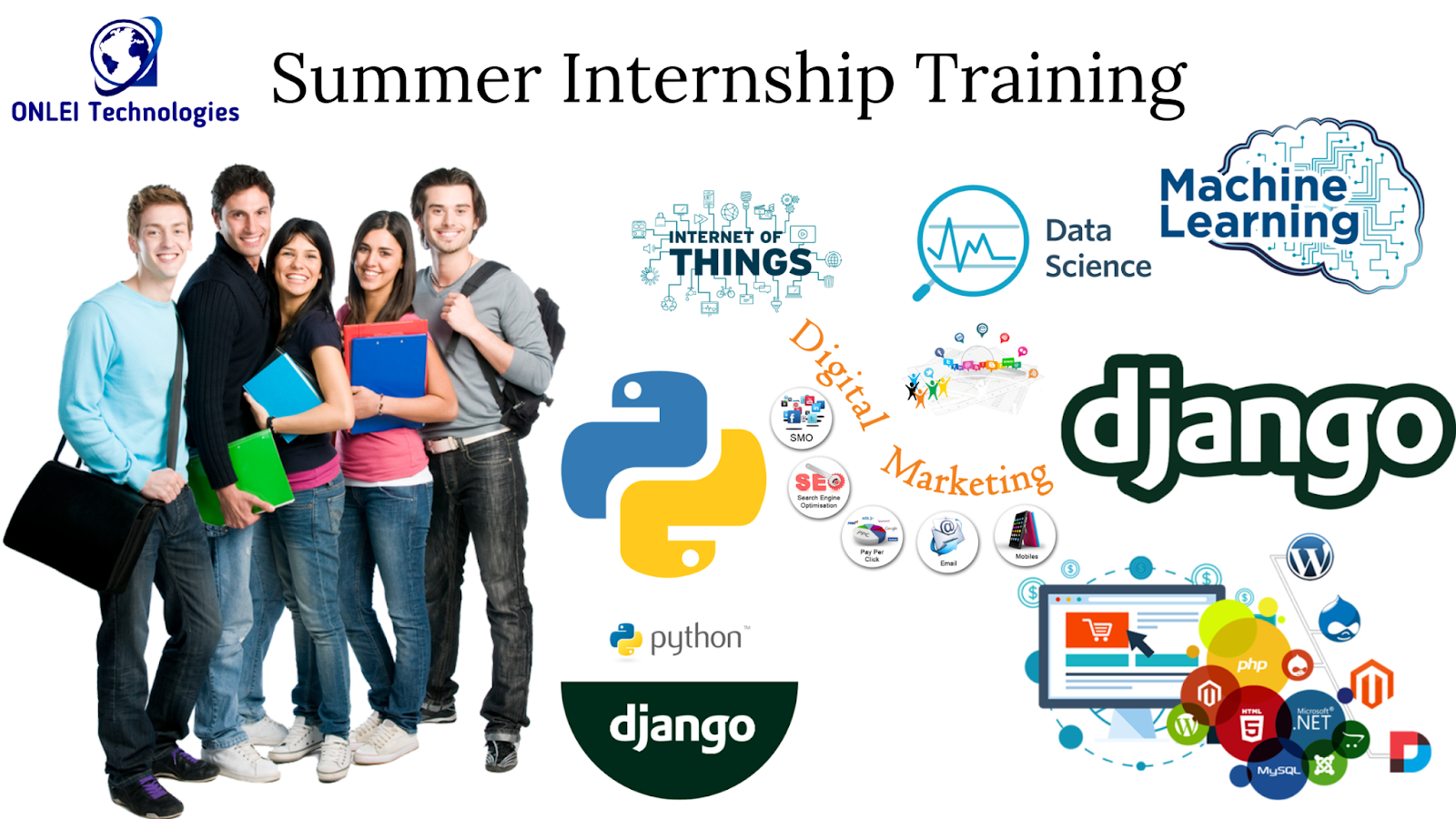
    1.CSE / ITPython, Data Science, Machine Learning, Digital Marketing, Web Development, Android App Development4, 6, 8 Weeks
    2.ECE / EEEPython, Data Science, Machine Learning, IoT , VLSI , Embedded Systems4, 6, 8 Weeks
    3. ME / CEAutoCAD, 3ds Max, Revit, Quantity Takeoff4, 6, 8 Weeks
    4.BCA / MCADigital Marketing, Python, Data Science, Machine Learning,Web Development, Android App Development4, 6, 8 Weeks
    5.BBA / MBADigital Marketing, Python, Data Science, Machine Learning,Web Development, Android App Development4, 6, 8 Weeks

    Important Links

    Home Page 

    Courses Link  

    1. Python Course  
    2. Machine Learning Course 
    3. Data Science Course 
    4. Digital Marketing Course  
    5. Python Training in Noida 
    6. ML Training in Noida 
    7. DS Training in Noida 
    8. Digital Marketing Training in Noida 
    9. Winter Training 
    10. DS Training in Bangalore 
    11. DS Training in Hyderabad  
    12. DS Training in Pune 
    13. DS Training in Chandigarh/Mohali 
    14. Python Training in Chandigarh/Mohali 
    15. DS Certification Course 
    16. DS Training in Lucknow 
    17. Machine Learning Certification Course 
    18. Data Science Training Institute in Noida
    19. Business Analyst Certification Course 
    20. DS Training in USA 
    21. Python Certification Course 
    22. Digital Marketing Training in Bangalore
    23. Internship Training in Noida
    24. ONLEI Technologies India 
  • Inventory Management Using Machine Learning Project

    Hi Everyone , Our Today’s Topic is Inventory Management Using Machine Learning Project . So Let’s Start

    In a global market that offers opportunities for competitors every day, some companies are turning to AI and machine learning to try to gain an edge. Supply chain and inventory management is an area that has been losing some media attention, but where industry leaders have been working hard to develop new AI and machine learning technologies over the past decade.

    Many prominent companies are now using machine learning to enhance business processes in ways that would have been science fiction 30 years ago, from customer inquiries to product acquisition plans. The next month’s shelf is based on satellite data. Supply chain and inventory management systems are poised to incorporate the concept of intelligent automation in the next five to ten years.

    New dimensions of supply chain and inventory management enable companies to integrate large amounts of data in new ways, avoid costly plant breakdowns, exceed customer expectations for product and service demands and increase long-term returns on investment.

    Machine Learning : Inventory Management Using Machine Learning Project

    Integrating machine learning into supply chain management can help streamline many mundane tasks and allow companies to focus on more impactful business activities.

    It can help companies create AI-powered workflows to reduce risk, improve transparency and improve efficiency, all of which are key to making the manufacturing process sustainable. and longevity in the future.

    A recent study by Gartner also suggests that new technologies such as artificial intelligence (AI) and machine learning (ML) will disrupt the manufacturing process in the future – if the world changes. Global pandemic will teach us that we must not oppose the future. the evolution of platforms, such as companies that have resisted changes in e-commerce and omnichannel chains.

    Considered to be one of the most valuable technologies, ML systems enable efficient processes that result in increased revenue and profit.

    Machine learning is a complex and interesting topic that can solve many problems in all fields. 

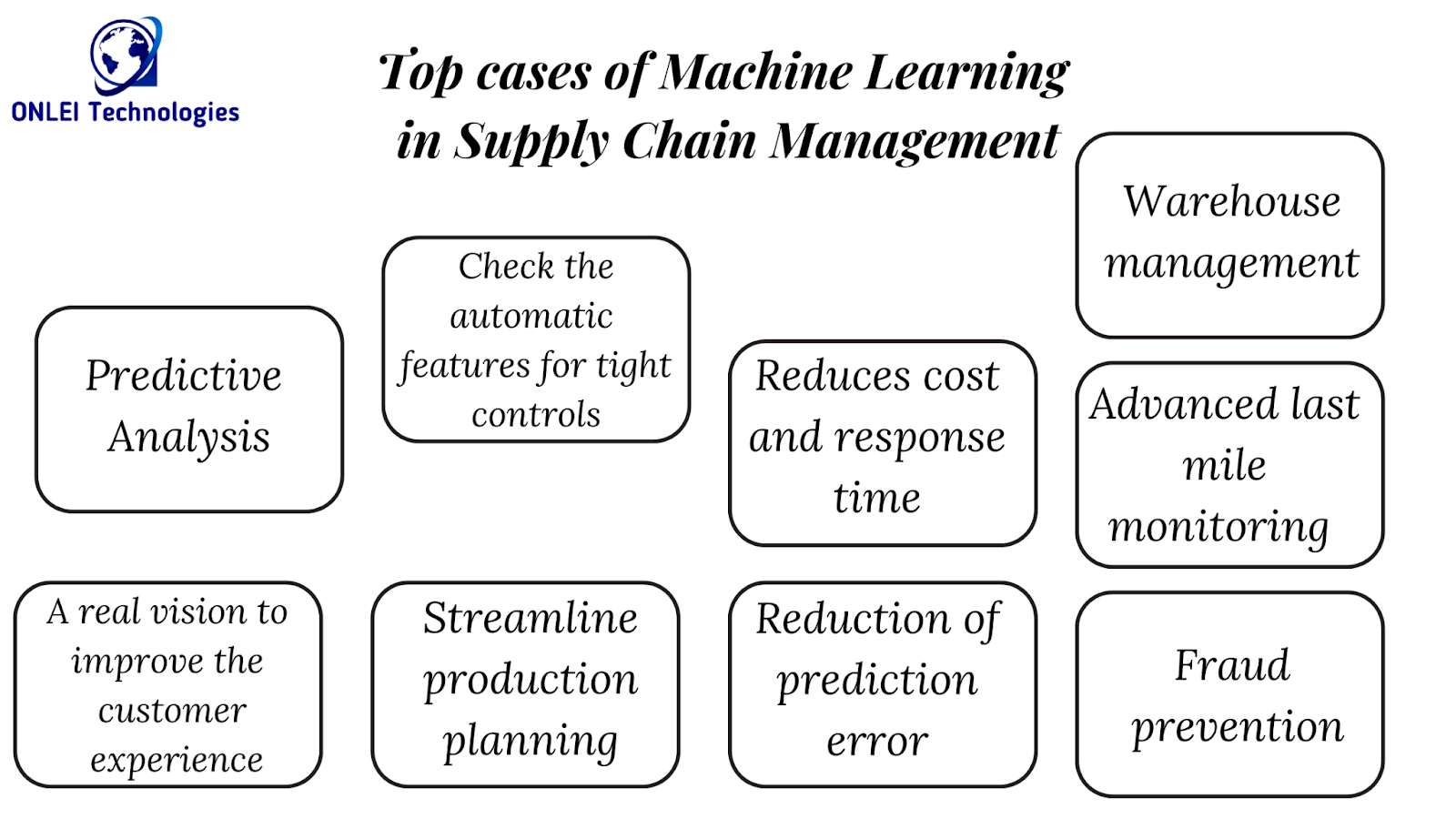
    Top cases of Machine Learning in Supply Chain Management

    Supply chain, being a data-intensive industry, has many machine learning applications. Below are the top cases for machine learning and supply chain management that can help make the company more efficient and optimized.

    Inventory Management Using Machine Learning Project

    1.Predictive Analysis

    Accurate forecasting and supply chain management have many benefits, such as lower costs and better inventory levels.

    Using machine learning models, businesses can take advantage of predictive analytics to predict demand. These machine learning models are adept at discovering hidden patterns in historical data. Machine learning in the supply chain can also be used to identify problems in the supply chain before they disrupt the business. Having a robust supply chain forecasting system means the business has the resources and intelligence to respond to emerging issues and threats. And the effectiveness of the response increases in line with the speed with which the business can respond.

    2. Check the automatic features for tight controls

    Logistics companies often conduct manual inspections to check containers or packages for any type of damage during transit. The rise of artificial intelligence and machine learning has expanded the possibilities for implementing quality control throughout the supply chain life cycle.

    Machine learning techniques enable automated fault diagnosis of industrial equipment and damage analysis through image recognition. The benefit of these automated checks results in a reduced chance of delivering incorrect or incorrect items to customers. 

    3. A real vision to improve the customer experience

    A Statista study found visibility as a continuing challenge affecting companies in the supply chain. Successful supply chain businesses rely heavily on visibility and tracking, and are constantly looking for technologies that can improve visibility. Machine learning techniques, including a combination of deep analytics, IoT, and real-time monitoring, can be used to dramatically improve supply chain visibility, helping businesses transform the customer experience and achieve faster delivery promises. To do this, machine learning models and workflows analyze historical data from various sources, and uncover the connections between all processes in the supply chain. A prime example of this is that Amazon uses machine learning to deliver unique experiences to its customers. To do this, ML allows the company to better understand the link between product recommendations and subsequent customer website visits. 

    4. Streamline production planning 

    Machine learning can help improve the complexity of production planning. Machine learning models and techniques can be used to train sophisticated algorithms on existing production data in a way that helps identify areas of potential efficiency in waste management.

    In addition, the use of machine learning in the supply chain to create an environment that can adapt to cope with any type of disruption is significant. 

    5. Reduces cost and response time 

    A growing number of B2C companies are deploying machine learning systems to trigger automated responses and manage imbalances between demand and supply, thereby reducing costs and improving customer experience. The ability of machine learning algorithms to analyze and learn from real-time data and delivery reports helps supply chain managers to optimize their routes, reduce driving time, reduce costs and improve efficiency. manufacturing. 

    In addition, by improving integration with various logistics service providers and integrating freight and warehousing processes, supply chain management costs and efficiencies can be reduced.

    6. Warehouse management 

    Effective supply chain management is often the same as warehousing and inventory management. With the latest insights on demand and supply, machine learning can drive continuous improvement in companies’ efforts to achieve the level of service customers demand at the lowest possible cost.

    Machine learning in the supply chain and its patterns, trends and predictive capabilities can also solve the problem of stockpiling or overstocking and completely transform your warehouse management. By using AI and ML, you can also quickly analyze large datasets and avoid human errors in such situations.

    7. Reduction of prediction error 

    Machine learning serves as a powerful analytical tool to help companies process big data.

    Apart from such big data processing, machine learning and supply chain are also seen to be used in different ways and changes, all thanks to telematics, IoT devices, intelligent transportation and other similar powerful technologies. him. This allows companies in the supply chain to get better information and help them make better decisions. The McKinsey report also stated that implementing AI and ML based Supply Chain can reduce risks.

    8. Advanced last mile monitoring 

    Last mile transportation is a critical part of the entire supply chain, as its performance can affect many verticals, including customer experience and product quality. The data also shows that last mile delivery in the supply chain accounts for 28% of all delivery costs.

    Machine learning in the supply chain can provide great opportunities by analyzing different data points about how people use their addresses and the total time it takes to deliver goods to certain locations. ML can also be of great help to optimize the process and provide customers with accurate shipping status information.

    9. Fraud prevention 

    Machine learning algorithms can improve product quality and reduce the risk of fraud by automating the analysis and analysis process, followed by the analysis of real-time results to identify anomalies or deviations from normal values.

    In addition to this, machine learning tools can also prevent identity theft, which is one of the main causes of disruption in the global supply chain.

    Again, Walmart is diving headfirst into ML technology which is showing the potential to generate huge profits. His first data obtained from IBM Weather from 2014 revealed some interesting correlations between weather and consumer buying behavior. For example, the company found that people are more likely to buy steak when it is hot, windy, and cloudy, while burger sales increase in hot and dry weather. The chain used this information to promote burgers, based on weather forecasts, and saw an 18% increase in beef patty sales.

    Important Links

    Home Page 

    Courses Link  

    1. Python Course  
    2. Machine Learning Course 
    3. Data Science Course 
    4. Digital Marketing Course  
    5. Python Training in Noida 
    6. ML Training in Noida 
    7. DS Training in Noida 
    8. Digital Marketing Training in Noida 
    9. Winter Training 
    10. DS Training in Bangalore 
    11. DS Training in Hyderabad  
    12. DS Training in Pune 
    13. DS Training in Chandigarh/Mohali 
    14. Python Training in Chandigarh/Mohali 
    15. DS Certification Course 
    16. DS Training in Lucknow 
    17. Machine Learning Certification Course 
    18. Data Science Training Institute in Noida
    19. Business Analyst Certification Course 
    20. DS Training in USA 
    21. Python Certification Course 
    22. Digital Marketing Training in Bangalore
    23. Internship Training in Noida
    24. ONLEI Technologies India 
  • Data Scientist : Finance Career Path

    Data Scientist : Finance Career Path

    Hi Everyone , Our Today’s topic is Data Scientist : Finance Career Path. 

    Data scientists are crucial to almost every industry, and one sector where they play an especially pivotal role is finance. Learn all about the role of data science in the finance industry here.

    Data science within finance encompasses a wide range of opportunities for investment careers. Areas with a technology focus include cybersecurity, data science, machine learning, and AI, among many others. Roles that require financial or investment expertise include blockchain development and quantitative investing.

    Data Science has become very important in the Finance Industry, which is mostly used for Better Risk Management and Risk Analysis. Better analysis leads to better decisions which lead to an increase in profit for financial institutions. Companies also analyze the trends in data through business intelligence tools.

    How much can data scientists in the finance industry earn?

    The salary you might expect to earn as a data scientist will vary depending on your skill level, area of expertise (e.g. risk assessment vs. customer experience), and the organization you’re working for. Even the job title itself will have an impact. While this makes it hard to pin down an exact salary, we can get an estimate of how much you might be able to earn in the finance sector by looking at median salaries for various data roles.

    According to the salary comparison website, Payscale, these are the average salaries for financial data analytics jobs in the US.

    How do I become a data scientist in finance?

    Skills Required for Financial Data Scientist Role

    1. Data Analysis / Quantitative Techniques. Knowledge required to perform data analysis which would includes statistics, decision sciences, operations research, econometrics and predictive analytics. …
    2. Technical Knowledge. …
    3. Data Munging. …
    4. Domain Knowledge.

    Best examples of using data science in finance

    • Identification of different customer groups for better targeting of products, offers, and services.
    • prediction of customer value and loyalty.
    • investment and risk modeling.
    • credit allocation.
    • loan application approvals.
    • churn analysis.
    • personal customer support.

    Applications of Data Science

    • Healthcare. Healthcare companies are using data science to build sophisticated medical instruments to detect and cure diseases.
    • Gaming. …
    • Image Recognition. …
    • Recommendation Systems. …
    • Logistics. …
    • Fraud Detection. …
    • Internet Search. …
    • Speech recognition.

    What Does a Data Scientist in Finance Actually Do?

    As the backbone of the world’s economy, the finance sector has long understood the importance of big data for making profitable decisions and taking calculated risks. One of the trailblazers in data science, the industry has used big data to transform everything from how the stock market works to detecting fraud and even improving the customer experience. The array of potential applications offered by big data has resulted in huge demand for talented scientists in the finance sector.

    Data Scientist : Finance Career Path

    With financial technology, or fintech, powering modern investing and asset management activities like never before, data analysis is one of the most important job-ready skills that can be honed across finance roles.

    All jobs in Data Science require some degree of coding and experience with technical tools and technologies. To summarise: Data Engineer: Moderate amount of Python, more knowledge of SQL and optional but preferable is knowledge on a Cloud Platform.

    Important Links

    Home Page 

    Courses Link  

    1. Python Course  
    2. Machine Learning Course 
    3. Data Science Course 
    4. Digital Marketing Course  
    5. Python Training in Noida 
    6. ML Training in Noida 
    7. DS Training in Noida 
    8. Digital Marketing Training in Noida 
    9. Winter Training 
    10. DS Training in Bangalore 
    11. DS Training in Hyderabad  
    12. DS Training in Pune 
    13. DS Training in Chandigarh/Mohali 
    14. Python Training in Chandigarh/Mohali 
    15. DS Certification Course 
    16. DS Training in Lucknow 
    17. Machine Learning Certification Course 
    18. Data Science Training Institute in Noida
    19. Business Analyst Certification Course 
    20. DS Training in USA 
    21. Python Certification Course 
    22. Digital Marketing Training in Bangalore
    23. Internship Training in Noida
    24. ONLEI Technologies India 

  • How Data Science Used in Finance

    How Data Science Used in Finance

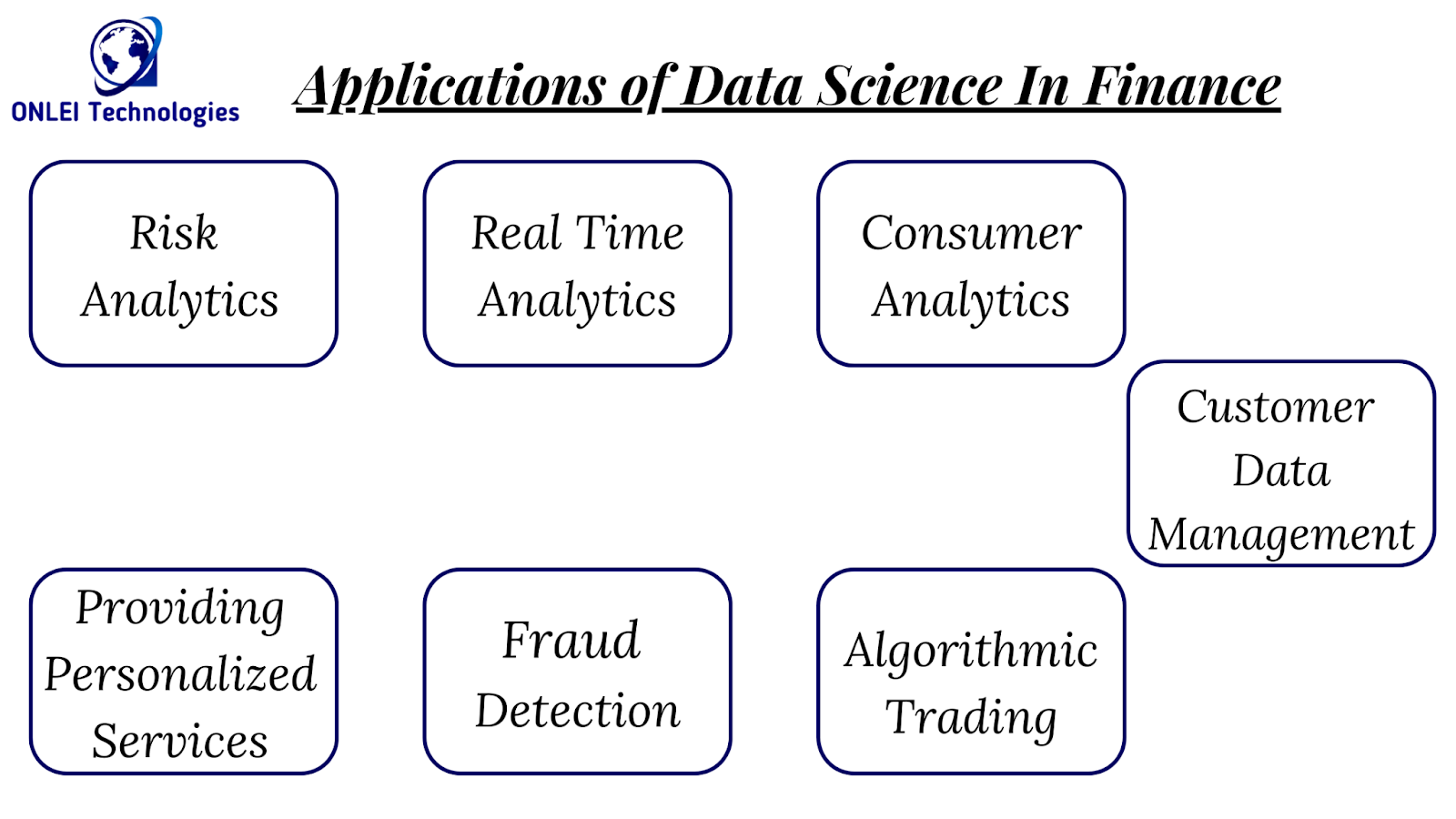
    Nearly every industry needs data scientists, but the financial sector is one where they are especially critical. Numerous financial sectors, including algorithmic trading, fraud detection, customer management, risk analytics, and others, use data science. Businesses that use data science services in the banking industry have new chances to build customer loyalty, safeguard revenues, and stay competitive.

    What financial data science benefits may your business expect? Discover some data science applications in finance by continuing to read!

    How can Data Science be used in finance?

    Risk management and analytics

    One of the key applications of data science in banking is risk analytics. The business may make strategic decisions and increase its dependability and security with the aid of analytics and risk management.Different sorts of uncertainty might affect a firm. These originate from competitors, loans, markets, and other sources. The first steps in risk management are to identify, monitor, and rank the risks. There is a huge amount of data available, including customer information and economic transactions. Thus, the businesses use this kind of data to strengthen and advance the risk score model. Another important component of risk management is checking the clients’ credit scores. Corporations are utilizing machine learning algorithms to assess credit ratings and client transactions with the use of data science in finance applications.

    Real-time analytics using data science

    In traditional analytics, data analysis always happens in batches. In other words, processing wasn’t real-time but rather historical. Different fields that required real-time data to provide insight into the present faced difficulties as a result.

    However, technological advancements in the fields of Data Engineering, Data Science, Machine Learning, and Business Intelligence, as well as the expansion of dynamic data pipelines, only allow for a very little amount of access time lag. Companies are able to monitor operations, loan values, and other economic features without lag thanks to that form of data science implementation in finance.

    Analytics for consumers

    Customer customisation is the financial institutions’ main business. Financial institutions can use data science in finance to learn about client behavior and use real-time analysis to make wise business decisions. Consumer analysis is used by financial institutions like insurance companies to analyze client behavior, increase revenues, and cut costs by fewer than zero clients.

    Customer data management

    Effective customer data management is made feasible in finance through data science. Financial businesses require data. Big data has in fact revolutionized how financial organizations operate. The diversity and volume of data have been considerably influenced by numerous transactions and social networks. Data that is difficult to manually extract from semi-structured or unstructured sources should be handled by financial professionals.

    As a result, data science is well-suited to handle massive amounts of unstructured raw data through the use of tools like text analysis, data mining, and natural language processing. Furthermore, by carefully examining the customer data, machine learning algorithms also assess monetary patterns and changes in market pricing.

    Investigating financial fraud

    Fraud is a significant problem for financial institutions. The dangers of fraud have increased with the volume of transactions. However, with the growth of big data and analysis tools, financial firms can now keep an eye on fraud. One of the most prevalent fraud strategies used by financial services companies is credit card fraud.

    Financial organizations are able to identify anomalous spending patterns or consumer behavior in real time thanks to data science in finance and machine learning algorithms. As a result, both consumer and commercial losses are decreased as banks are better able to react rapidly.

    Additionally, machine learning can spot wider patterns of unusual behavior, such as simultaneous hacking of multiple firms. This makes it easier for banks to identify cyberattacks and organized criminality.

    Data science and algorithmic trading in finance

    Algorithmic trading is one of the most significant uses of data science in finance. Financial institutions use complex mathematical formulas and incredibly fast calculations to create innovative commercial strategies for algorithm trading. Algorithmic trading has been significantly impacted by big data and data science, which have now taken over as data science’s most significant component.

    In algorithmic trading, there are enormous data reservoirs and information streams, as well as a model that quantifies, identifies, and characterizes the basic data streams. The analysis engine’s primary goal is to use massive datasets to produce more accurate market forecasts and predictions.

    Digitization Means More Opportunity

    Although some parts of the financial industry are at the edge of data and have embraced the world of fully digitized data, not all companies have adapted to the times. Some sectors, such as investment, continue to rely on legacy systems.

    But changes in the financial sector and business as a whole – from the effect of the normalization of remote workers due to COVID to technological advances that allow the rapid entry and analysis of big data – have increased.

    How Data Science Used in Finance

    The role of data analytics in accounting and finance

    Advances in data analytics are creating opportunities for accountants and financial professionals to provide their clients with the best possible service in three areas: 

    • A broad and deep understanding of financial services and other businesses 
    • More accurate predictions for future market trends and industries 
    • Implement ongoing processes to improve accounting accuracy and reduce costs

    Data analysis and analytics use advanced techniques to help businesses make the most of the large amounts of data they collect. The goal is to create value and growth using three emerging technologies: 

    • Computing power and cloud storage have increased dramatically. Datasets can be large and complex, as services such as Amazon Web Services provide processing and storage that can automatically expand to meet needs.
    • Data sources such as Internet service providers, social media platforms, mobile applications, government and other open sources, as well as sensors and other embedded devices are ubiquitous. There are digital resources now based on open source software.
    •  An open network allows data scientists who specialize in data mining to easily communicate with domain experts who specialize in specific areas, including accounting and finance.

    Algorithmic Trading

    Algorithmic marketing provides the fastest way to analyze large amounts of customer data. It helps in making important financial decisions to stand out in this competitive industry. Data science and AI have brought changes in this industry by introducing different algorithmic trading systems. They take into account all the information from tweets, news, TV programs, etc. This will help predict market fluctuations and improve business strategy.

    Using advanced technologies like Hadoop, SQL, etc. data engineers are changing the way financial institutions operate.

    Finance data scientist job roles/responsibilities

    The majority of data scientists bring technical talents to the table, including expertise with Python and SQL, knowledge of probability and statistics, data visualization, machine learning, and AI. While these abilities may aid in sorting through vast amounts of data, the financial sector demands that its data scientists also possess subject knowledge, excellent communication skills, and the capacity to build connections with stakeholders.

    On the subject of domain expertise, data scientists should be knowledgeable about the particular area of data they intend to study, whether it be retail banking, hedge funds, investment banking, or fintech. For instance, it would be expected of a data scientist to comprehend economics, risk analysis, portfolio management, and financial markets while assessing investment risk data.

    Similarly, a loan data analyst needs to know how loans work, how a financial institution manages its loan portfolio, and the company’s risk assessment principles.

    On the communications front, data experts say that while the value of analytics within an organization often speaks for itself, a strong individual and the ability to embrace data science are critical skills to possess, especially during a recession when every sector is at a standstill. . The best data science leaders can demonstrate the positive impact of their work on business results and help managers and non-executive leaders understand what they are doing.

    Other common roles of financial industry data scientists include: 

    • Use data as a starting point to design experiences, services and products 
    • Develop statistical analysis and revenue generation processes 
    • Analyze behavioral data and identify growth opportunities 
    • Use analytics and statistics to measure data quality, product performance, and predict/interpret customer behavior. 
    • Develop dashboards to visualize outcomes for stakeholders

    Important Links

    Home Page 

    Courses Link  

    1. Python Course  
    2. Machine Learning Course 
    3. Data Science Course 
    4. Digital Marketing Course  
    5. Python Training in Noida 
    6. ML Training in Noida 
    7. DS Training in Noida 
    8. Digital Marketing Training in Noida 
    9. Winter Training 
    10. DS Training in Bangalore 
    11. DS Training in Hyderabad  
    12. DS Training in Pune 
    13. DS Training in Chandigarh/Mohali 
    14. Python Training in Chandigarh/Mohali 
    15. DS Certification Course 
    16. DS Training in Lucknow 
    17. Machine Learning Certification Course 
    18. Data Science Training Institute in Noida
    19. Business Analyst Certification Course 
    20. DS Training in USA 
    21. Python Certification Course 
    22. Digital Marketing Training in Bangalore
    23. Internship Training in Noida
    24. ONLEI Technologies India 
  • What is Artificial Intelligence in 2023

    Hi Everyone , Our Today’s Topic is What is Artificial Intelligence in 2023 ? Types, Trends, and Future of it? 

    What is Artificial Intelligence?

    Artificial intelligence (AI) is the ability of a computer or a robot controlled by a computer to do tasks that are usually done by humans because they require human intelligence and discernment.

    If you ask about artificial intelligence an AI researcher, (s) he would say that, Artificial intelligence is the simulation of human intelligence processes by machines, especially computer systems. Specific applications of AI include expert systems, natural language processing, speech recognition and machine vision.

    It is the simulation of natural intelligence in machines that are programmed to learn and mimic the actions of humans. These machines are able to learn with experience and perform human-like tasks. As technologies such as AI continue to grow, they will have a great impact on our quality of life.

    There are a lot of ongoing discoveries and developments, most of which are divided into four categories: reactive machines, limited memory, theory of mind, and self-aware AI.

    Artificial Intelligence in 2023

    How do we measure if Artificial Intelligence is acting like a human?

    The Turing Test is a method of inquiry in artificial intelligence (AI) for determining whether or not a computer is capable of thinking like a human being. The test is named after Alan Turing, the founder of the Turing Test and an English computer scientist, cryptanalyst, mathematician and theoretical biologist. 

    Turing proposed that a computer can be said to possess artificial intelligence if it can mimic human responses under specific conditions. The original Turing Test requires three terminals, each of which is physically separated from the other two. One terminal is operated by a computer, while the other two are operated by humans.

    During the test, one of the humans functions as the questioner, while the second human and the computer function as respondents. The questioner interrogates the respondents within a specific subject area, using a specified format and context. After a preset length of time or number of questions, the questioner is then asked to decide which respondent was human and which was a computer.

    The test is repeated many times. If the questioner makes the correct determination in half of the test runs or less, the computer is considered to have artificial intelligence because the questioner regards it as “just as human” as the human respondent.

    7 key benefits of AI for business

    As businesses continue to deploy artificial intelligence technologies within their operations, they are starting to reap tangible benefits, including material gains.

    1. Efficiency and productivity gains : 

     Efficiency and productivity gains are two of the most-often cited benefits of implementing AI within the enterprise. The technology handles tasks at a pace and scale that humans can’t match. At the same time, by removing such tasks from human workers’ responsibilities, AI allows those workers to move to higher-value tasks that technology can’t do. This allows organizations to minimize the costs associated with performing mundane, repeatable tasks that can be performed by technology while maximizing the talent of their human capital.

    2. Improved speed of business

    As fast as business moves in this digital age, AI will help it move even faster, said Karen Panetta, a fellow with the technical professional organization IEEE and Tufts University professor of electrical and computer engineering. 

    3. New capabilities and business model expansion

    4. Better customer service

    5. Improved monitoring

    6. Better quality and reduction of human error

    7. Better talent management

    What are the Types of Artificial Intelligence?

    However, even though artificial intelligence is referred to as AI in the media, there are different types of AI out there. These three types are 

    • Artificial narrow intelligence (ANI)
    • Artificial general intelligence (AGI) 
    • Artificial super intelligence (ASI)

    Artificial Narrow Intelligence

    ANI is also referred to as Narrow AI or Weak AI. This type of artificial intelligence is one that focuses primarily on one single narrow task, with a limited range of abilities. If you think of an example of AI that exists in our lives right now, it is ANI. This is the only type out of the three that is currently around. This includes all kinds of Natural Language or Siri.

    Artificial General Intelligence

    AGI technology would be on the level of a human mind. Due to this fact, it will probably be some time before we truly grasp AGI, as we still don’t know all there is to know about the human brain itself. However, in concept at least, AGI would be able to think on the same level as a human, much like Sonny the robot in I-Robot featuring Will Smith.

    Artificial Super Intelligence

    This is where it gets a little theoretical and a touch scary. ASI refers to AI technology that will match and then surpass the human mind. To be classed as an ASI, the technology would have to be more capable than a human in every single way possible. Not only could these AI things carry out tasks, but they would even be capable of having emotions and relationships.

    What is the Purpose of Artificial Intelligence?

    The purpose of Artificial Intelligence is to aid human capabilities and help us make advanced decisions with far-reaching consequences. That’s the answer from a technical standpoint. From a philosophical perspective, Artificial Intelligence has the potential to help humans live more meaningful lives devoid of hard labour, and help manage the complex web of interconnected individuals, companies, states and nations to function in a manner that’s beneficial to all of humanity.

    Where is Artificial Intelligence (AI) Used?

    AI is used in different domains to give insights into user behaviour and give recommendations based on the data. For example, Google’s predictive search algorithm used past user data to predict what a user would type next in the search bar. Netflix uses past user data to recommend what movie a user might want to see next, making the user hooked onto the platform and increasing watch time. Facebook uses past data of the users to automatically give suggestions to tag your friends, based on the facial features in their images.

    Advantages of Artificial Intelligence

    • Reduction in Human Error. …
    • Zero Risks. …
    • 24×7 Availability. …
    • Digital Assistance. …
    • New Inventions. …
    • Unbiased Decisions. …
    • Perform Repetitive Jobs. …
    • Daily Applications.

    Disadvantages of Artificial Intelligence

    • High Costs. The ability to create a machine that can simulate human intelligence is no small feat. …
    • No creativity. A big disadvantage of AI is that it cannot learn to think outside the box. …
    • Unemployment. …
    • 4. Make Humans Lazy. …
    • No Ethics. …
    • Emotionless. …
    • No Improvement.

    How does Artificial Intelligence (AI) Work?

    Building an AI system is a careful process of reverse-engineering human traits and capabilities in a machine, and using its computational prowess to surpass what we are capable of. 

    Machine Learning: Machine learning is a subfield of artificial intelligence, which is broadly defined as the capability of a machine to imitate intelligent human behavior. Artificial intelligence systems are used to perform complex tasks in a way that is similar to how humans solve problems.

    Deep Learning: Deep Learning is an ML technique. It teaches a machine to process inputs through layers in order to classify, infer and predict the outcome.

    Natural Language Processing: NLP is a science of reading, understanding, and interpreting a language by a machine

    Computer Vision: Computer vision algorithms try to understand an image by breaking down an image and studying different parts of the object. 

    Cognitive Computing: Cognitive computing algorithms try to mimic a human brain by analysing text/speech/images/objects in a manner that a human does and tries to give the desired output.

    To understand How Artificial Intelligence actually works, one needs to deep dive into the various sub-domains of Artificial Intelligence and understand how those domains could be applied to the various fields of the industry. 

    Important Links

    Home Page 

    Courses Link  

    1. Python Course  
    2. Machine Learning Course 
    3. Data Science Course 
    4. Digital Marketing Course  
    5. Python Training in Noida 
    6. ML Training in Noida 
    7. DS Training in Noida 
    8. Digital Marketing Training in Noida 
    9. Winter Training 
    10. DS Training in Bangalore 
    11. DS Training in Hyderabad  
    12. DS Training in Pune 
    13. DS Training in Chandigarh/Mohali 
    14. Python Training in Chandigarh/Mohali 
    15. DS Certification Course 
    16. DS Training in Lucknow 
    17. Machine Learning Certification Course 
    18. Data Science Training Institute in Noida
    19. Business Analyst Certification Course 
    20. DS Training in USA 
    21. Python Certification Course 
    22. Digital Marketing Training in Bangalore
    23. Internship Training in Noida
    24. ONLEI Technologies India 
  • Does It Matter If I Use HTML Or CSS?

    Hi Everyone , Our Today’s Topic is Does It Matter If I Use HTML Or CSS ?

    “Web Designing has a vast scope with the booming IT industry not in India but also abroad”.

    What is Web development & Web Design ?

    The difference between web design vs. web development is the focus. Web design focuses on creating a website’s look and feel via design tools while web development focuses on bringing that look and feel to life via programming languages.

    Web design

    Web design focuses on creating different graphical elements for online use. Designers may create infographics, ads, logos…but a large focus — and the focus of this video — is on the visual look and feel of a website. 

    Some things web designers generally do are:

    • Wireframe design prototypes
    • Create homepages, inner pages, and landing pages
    • Work with developers and project managers to build and redesign websites

    When they work on websites, designers typically focus on how they can create a good user experience (UX) for site visitors.  

    Web development definition

    So while web designers focus on the visuals of a website, web developers work on bringing those visuals to life. 

    They’ll use different programming languages, like HTML, PHP, and Java, to develop a website’s core functionality. Functionality might be things like what happens when someone clicks a button or how the main navigation loads when a user scrolls or clicks on it. 

    A developer may work with a content management system (CMS) to get your website online and available to users. Some common systems include:

    • WordPress
    • Magento
    • Joomla
    • Drupal

    A good portion of a web developer’s work is also focused on maintaining websites, so doing things like upgrading the CMS, managing the security, and offering web support for any issues that arise. 

    ONLEI Technologies Provides Best Online Web Development Training , Best Online Web Development Course in India .

    Does It Matter If I Use HTML Or CSS?

    Best Online Web Development Training

    ONLEI Technologies provides Best Online Web Development Training . Looking for a Web Development Course with Live Projects by Experts ? No Worries, We are here to Help you .

    ONLEI Technologies Real Time Web Development by 6+ Years Experienced Industry Experts . We also offer students with the essential skills and training in web designing courses to enter and prosper in the dynamic world of web design .

    HTML and CSS are the two fundamental languages for building any website. What’s the difference?

    What does HTML stand for?

    HTML stands for Hypertext Markup Language. Think of HTML as the skeleton of the document. The HTML is what gives structure to the site. This is done through tags, elements, and attributes. Whether you want headings, lists, images, or links, HTML can do all of that.

    Let’s start with basic HTML Structure. 

    <html>

    <head>

        <!– Information about the page –>

        <!–This is the comment tag–>

        <title>ONLEI Technologies</title>

    </head>

    <body>

        <!–Contents of the webpage–>

    </body>

    </html>

    What is CSS?

    Cascading Style Sheets (CSS) is a code language used to describe the look and formatting of another document (in our case a web page written using html). Without CSS your site would be a white page with text stripped of all other formatting. CSS is useful as it separates content from presentation elements, such as layout, colors, and fonts.

    Link CSS to HTML

    The relationship between HTML as well as CSS is set with the ‘rel’ HTML and CSS

    <link rel = “stylesheet” type=”text/css” href=”main.css”/>

    Alternatively, CSS can be linked using font-family property or a text editor changing the font –

    H1 {

    Font-family: Arial

    }

    Is HTML & CSS Enough To Create Websites ?

    So, is HTML and CSS enough to create a website? The short answer is yes, you can build a simple website with just HTML and CSS. However, if you want to start building some really cool websites, and have more flexibility in what you can do, you need to use JavaScript, a backend language, web hosting, and databases. With these domains, you can build anything you want on the web!

    There are several Web Hosting providers. For example, AccuWeb Hosting provides all hosting services like shared hosting, VPS hosting, Dedicated hosting, etc.

    Why Are HTML And CSS Enough To Create A Website?

    HTML is the code that is used to structure a web page and its content. That means that any text, images, forms, links, and buttons you see on a website are generated with HTML.

    CSS is the language you use to style a webpage. It is how you change aspects such as the size, color, and positioning of the elements listed above.

    With these two languages combined, you have more than enough tools to build a simple one-page landing page or a business website. If you have information that you want to get across to a potential visitor, and that content never changes and there are no additional actions your user needs to take, you do not need anything else to build a basic website.

    Best Online Web Development Course in India

    This Web development Training in India helps students develop technical, creative and can design websites which can lead to a career in web design & Web development . We are one of the best Web Development Institute in India.

    Get the best Web Development Training in India by India’s leading Web Development Institute . All our Web Development Training Experts are Industry experts and love to share their practical knowledge with the students .

    Our Web Development Experts understand the fresher’s & working professional’s requirements very well. We offer Web Development Classroom Training and Web Development Online Training.

    Best Web Development Training Institute in India

    ONLEI Technologies Provide Job Oriented Web Development Course in India from Experts with 100% Placement assistance . Our Web Development Course Curriculum includes HTML & HTML5, CSS3, Javascript, JQuery, Bootstrap, React JS, Redux, Node JS, MongoDB, Express.

    Important Links

    Home Page 

    Courses Link  

    1. Python Course  
    2. Machine Learning Course 
    3. Data Science Course 
    4. Digital Marketing Course  
    5. Python Training in Noida 
    6. ML Training in Noida 
    7. DS Training in Noida 
    8. Digital Marketing Training in Noida 
    9. Winter Training 
    10. DS Training in Bangalore 
    11. DS Training in Hyderabad  
    12. DS Training in Pune 
    13. DS Training in Chandigarh/Mohali 
    14. Python Training in Chandigarh/Mohali 
    15. DS Certification Course 
    16. DS Training in Lucknow 
    17. Machine Learning Certification Course 
    18. Data Science Training Institute in Noida
    19. Business Analyst Certification Course 
    20. DS Training in USA 
    21. Python Certification Course 
    22. Digital Marketing Training in Bangalore
    23. Internship Training in Noida
    24. ONLEI Technologies India 

  • What is Exploratory Data Analysis in Data Science ?

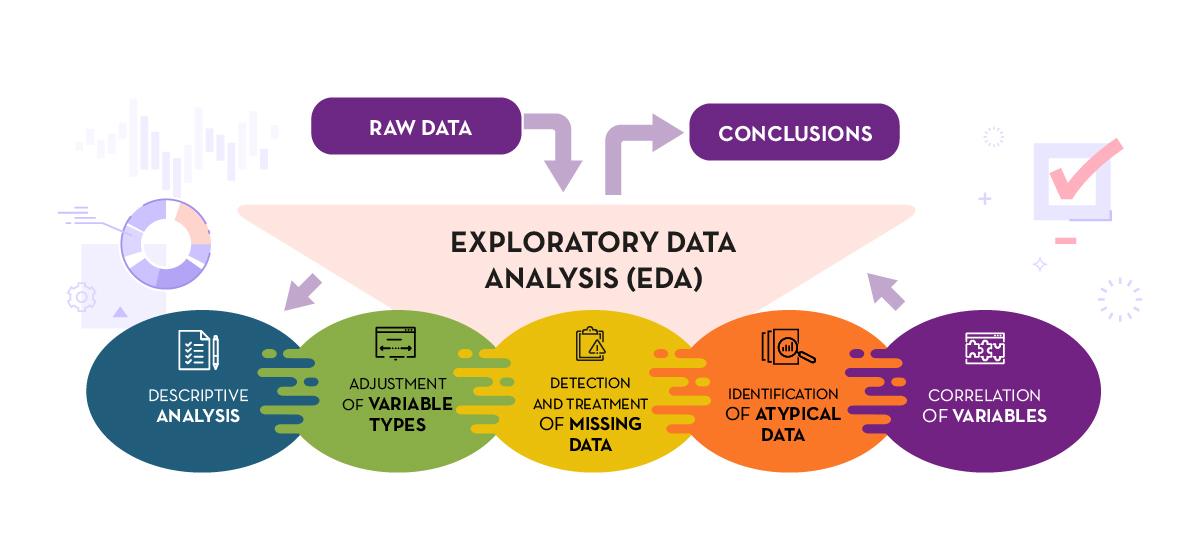
    Exploratory data analysis in Data Science (EDA) is a (mainly) visual approach and philosophy that focuses on the initial ways by which one should explore a data set or experiment. Two main aspects of EDA are:

    1. Openness, meaning a person exploring the data should be open to all possibilities prior to its exploration.
    2. Skepticism, meaning one must ensure that the obvious story the data tells is not misleading.

    Exploratory Data Analysis in Data Science

    There is no formal set of techniques that are used in EDA (Exploratory Data Analysis in Data Science) . Remember, EDA is an approach to how we analyze data, not a specific set of methods set in stone. It’s a philosophy and art more so than a science.

    Exploratory Data Analysis in Data Science

    Exploratory Data Analysis in Data Science : Its purpose is to take a general view of some given data without making any assumptions about it. We are trying to get a feel for the data and what it might mean, as opposed to reject or accept some sort of premise around it, before we begin its exploration.

    In other words, with EDA we let the data speak for itself instead of trying to force the data into some sort of predetermined model.

    Nevertheless, some techniques are used to help us get a feel for the data. For instance, we can categorize data, quantify some of its basic aspects, or visualize it.

    For instance, raw data can be plotted using histograms or other visualization techniques. Sometimes, the data is juxtaposed in a manner that helps us spot important patterns within or between data sets.

    Overall, EDA can help us:

    • Catch mistakes
    • Gain new insights
    • Detect outliers
    • Test assumptions
    • Identify important factors in the data
    • Understand relationships

    And perhaps, most importantly, EDA is used to help figure out our next steps with respect to the data. For instance, we might have new questions we need answered or new research we need to conduct.

    The term “exploratory analysis” refers to methods used to analyze data without having a specific hypothesis in mind. Often this type of analysis is referred to as exploratory because it gives you the flexibility to look at data without knowing exactly how it is going to be analyzed. For example, if you want to find out whether there are differences between men and women, you could compare the ages of people in each gender group. If you don’t know about any potential differences, you’ll have no way of knowing if you’re seeing something significant or just random noise.

    For a general overview of data analysis, have a look at our Data Science Training in Noida if you’re interested in learning more. You can develop your data science and analytics skills with the aid of ONLEI Technologies.

    What is the importance of exploratory data analysis in data science ?

    Exploratory Data Analysis in Data Science : One of the most fundamental abilities you need to acquire to become a data scientist is exploratory data analysis (EDA), which is also known as descriptive statistics. This collection of abilities enables you to recognise patterns and interpret what you view. It can assist you in deciding whether you should continue gathering data or whether you currently have sufficient data to make informed decisions. EDA can be used to determine the degree of variation present within a dataset and the degree of independence or correlation between the values of various variables.

    You can utilize EDA to make sure you’re asking the proper questions and that your findings are pertinent to the business outcome you’re aiming for. EDA can be used, for instance, to determine whether the number of consumers that purchase a certain product each month correlates with the number of salespeople employed by the division that sells those products. If you discover that the statistics are connected, you might draw the conclusion that increasing the number of salespeople will boost overall sales.

    After completing EDA, you can begin creating predictive models with more sophisticated tools like regression models, clustering algorithms, and decision trees. With the help of these methods, you can discover correlations between various variables, forecast future trends, and even automate some procedures.

    Why Exploratory Data Analysis in Data Science ?

    Exploratory data analysis in data science has a number of advantages, including:

    • By extracting averages, means, lowest and maximum values, etc., you may better comprehend variables.
    • Analyze the data to find errors, outliers, and missing numbers.
    • By displaying data in graphs like box plots, scatter plots, and histograms, you can spot trends.

    Therefore, the primary objective is to better grasp the data and use tools efficiently to derive insightful or conclusive findings.

    Exploratory data analysis in data science uses a variety of methodologies and strategies to help you understand your data better. When you do this, you may discover patterns or insights that you might have overlooked if you had simply employed analytical tools. This kind of data analysis is crucial because it can make it easier for you to understand your data and spot problems that need to be fixed. Exploratory data analysis should therefore be a part of your data science workflow.

    Important Links

    Home Page 

    Courses Link  

    1. Python Course  
    2. Machine Learning Course 
    3. Data Science Course 
    4. Digital Marketing Course  
    5. Python Training in Noida 
    6. ML Training in Noida 
    7. DS Training in Noida 
    8. Digital Marketing Training in Noida 
    9. Winter Training 
    10. DS Training in Bangalore 
    11. DS Training in Hyderabad  
    12. DS Training in Pune 
    13. DS Training in Chandigarh/Mohali 
    14. Python Training in Chandigarh/Mohali 
    15. DS Certification Course 
    16. DS Training in Lucknow 
    17. Machine Learning Certification Course 
    18. Data Science Training Institute in Noida
    19. Business Analyst Certification Course 
    20. DS Training in USA 
    21. Python Certification Course 
    22. Digital Marketing Training in Bangalore
    23. Internship Training in Noida
    24. ONLEI Technologies India 
  • What is Health Care Data Analytics ?

    Hello Everyone , So today we will let you know about Importance of Health Care Data Analytics or What is Health Care Data Analytics . Can big data save lives? Advocates of the emerging field of health care analytics certainly believe it can.

    Big data analytics is transforming the way organizations do business in dozens of industries. But the impact may ultimately be most profound in the field of medicine, where advanced health care analytics holds the potential to revolutionize patient care.

    Health Care Data Analytics

    Big data is already having positive effects on many areas of health care, including:

    • Advancements in telemedicine
    • Enhanced patient engagement
    • Wearables that provide real-time alerts
    • Disease prevention/population health
    • Improving/refining treatment standards
    • Potential to help cure diseases
    • Improved staffing efficiency
    • Prevention of opioid abuse

    As the nation’s top technology innovators partner with health care organizations to leverage valuable insights from the immense amount of healthcare data being generated and collected each day, the search is on for new ways to transform rapidly expanding databases into improved outcomes for patients and entire populations.

    Types of Data Analytics 

    Understanding the analytics progression and starting in the right place will help to guarantee success with advanced analytics and lead to AI utilization.

    There are four types of analytics, Descriptive, Diagnostic, Predictive, and Prescriptive. The chart below outlines the levels of these four categories. It compares the amount of value-added to an organization versus the complexity it takes to implement.

    The idea is that you should start with the easiest to implement, Descriptive Analytics. In this blog, we will review the four analytics types and an example of their use cases, and how they all work together.

    Descriptive Data Analytics revolves around data and findings related to what has happened already in the past. It does not involve making any inferences or predictions with the data. It is rather a type of analytics that forms the base for further analysis and other types of data analysis. It basically involves collecting historical data and presenting the data in an organized manner for easy understanding. Very basic levels of statistical methods such as average, percentage change calculations, Mean etc. are used in Descriptive Analytics.

    Predictive Analytics is the type of data analysis where probabilities are used to forecast possible future events and outcomes. In predictive analytics, complex statistical techniques are used to predict the outcomes. For example- Statistical Data Modeling, Data Mining etc. Predictive Analytics is rather a step towards Machine Learning and Artificial Intelligence which involve predictive models. 

    Prescriptive Analytics is the stage in data analysis where the learnings from Descriptive and Predictive Analytics are used to suggest the best actionables for the business problem or challenges. This type of data analytics uses rather complex statistical tools and techniques to figure out the right course of action. Complex algorithms based on internal as well as external data are used to achieve the results. Because of this reason, Prescriptive Analytics is not a routine practice adopted by organizations as it requires specialized tools and statistical processes.

    What is the future of health care data analytics?

    Technology and digital transformation define the future healthcare. As more and more patient and clinical data is collected, healthcare organizations will be able to expand their knowledge and take action to improve patient experiences and, ultimately, health outcomes. Thus, new digital technologies that utilize healthcare analytics are being developed with the goal of improving global health.

    What role does the government play in Health Care Data Analytics?

    The government plays an important role in healthcare analytics. Concerns over how healthcare organizations gather, store, share, and use personal information have prompted numerous pieces of legislation at the federal and state level in order to protect patient privacy.

    In 1996, President Bill Clinton signed the Health Insurance Portability and Accountability Act (HIPAA) to ensure data confidentiality and security for medical information. Title II of HIPAA also requires healthcare organizations to secure their electronic access to health data and remain compliant with privacy regulations. More recently, the Office of the National Coordinator for Health Information Technology (ONC) issued the Federal Health IT Strategic Plan 2015-2020 to protect the privacy and security of health information and increase public confidence in the safety of health IT.

    Organizations that carry out healthcare analytics must comply with these regulations to, first and foremost, function legally, but also to prioritize patient data security. The information used in health analytics is personal and oftentimes sensitive in nature. It is therefore of extreme importance that healthcare organizations performing health analytics attend to the legislation surrounding their operations.

    Important Links

    Home Page 

    Courses Link  

    1. Python Course  
    2. Machine Learning Course 
    3. Data Science Course 
    4. Digital Marketing Course  
    5. Python Training in Noida 
    6. ML Training in Noida 
    7. DS Training in Noida 
    8. Digital Marketing Training in Noida 
    9. Winter Training 
    10. DS Training in Bangalore 
    11. DS Training in Hyderabad  
    12. DS Training in Pune 
    13. DS Training in Chandigarh/Mohali 
    14. Python Training in Chandigarh/Mohali 
    15. DS Certification Course 
    16. DS Training in Lucknow 
    17. Machine Learning Certification Course 
    18. Data Science Training Institute in Noida
    19. Business Analyst Certification Course 
    20. DS Training in USA 
    21. Python Certification Course 
    22. Digital Marketing Training in Bangalore
    23. Internship Training in Noida
    24. ONLEI Technologies India 
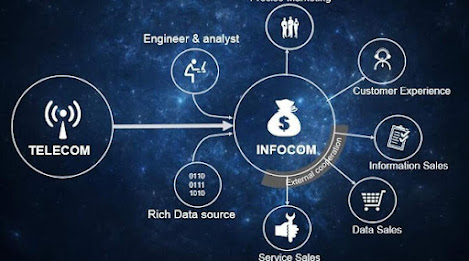
  • Data Science in Telecom Sector

    Hi Everyone , Our today’s topic is Data Science in Telecom Sector . So Here we are going to learn more about Data Science .

    Data science can help us predict the future and make better, data-driven decisions. With the use of real-time and predictive analytics, telecom companies can use data collected by their devices to build forecasts and gain insight into what they can do to improve operations. By leveraging big data in telecom, companies can analyze real-time data to identify the source of fraudulent transactions and correlate those with historical activity to prevent future counterfeit actions.

    Data Science in Telecom Sector

    What is Data Science in Telecom Sector Networking ? 

    Networking deals with wired as well as wireless networks whereas Data Science requires expertise in mathematics, statistics and computer science disciplines and uses techniques such as machine learning, data mining, data storing and visualization . A network is a collection of different connected objects. These objects present which are called a nodes or vertices. We draw a line to connect different object which are called edges. Different nodes connected with objects using edges and which can connect multiple objects.

    Big Data can help gather real-time customer satisfaction information through social media listening or Voice of the Customer analysis. It can also improve customer experience by identifying the most valuable customers who would benefit from dedicated treatment and better services . 

    How AI can Help Telecom Industry ? 

    Sophisticated AI algorithms and machine learning is used in telecom Industries to predict future results. The managers and operators can utilize the potential of data-driven facts, insight which helps in decision making. It reduces the problems with hardware, cell towers, and power lines.

    One of the most common IoT Telecom use cases is asset management and remote system monitoring. By using an IoT platform like Kaa, telecom companies can connect their diverse physical assets to the cloud and remotely manage their operations, investigate malfunctions, run firmware upgrades, and keep track of inventory.

    Importance of Data Science in Telecom Sector

    The importance of data science is based on the ability to take existing data that is not necessarily useful on its own and combine it with other data points to generate insights an organization can use to learn more about its customers and audience

    Some of the most important technical data scientist skills are: Statistical analysis and computing. Machine Learning. Deep Learning.

    By leveraging big data in telecom, companies can analyze real-time data to identify the source of fraudulent transactions and correlate those with historical activity to prevent future counterfeit actions.

    Important Links

    Home Page 

    Courses Link  

    1. Python Course  
    2. Machine Learning Course 
    3. Data Science Course 
    4. Digital Marketing Course  
    5. Python Training in Noida 
    6. ML Training in Noida 
    7. DS Training in Noida 
    8. Digital Marketing Training in Noida 
    9. Winter Training 
    10. DS Training in Bangalore 
    11. DS Training in Hyderabad  
    12. DS Training in Pune 
    13. DS Training in Chandigarh/Mohali 
    14. Python Training in Chandigarh/Mohali 
    15. DS Certification Course 
    16. DS Training in Lucknow 
    17. Machine Learning Certification Course 
    18. Data Science Training Institute in Noida
    19. Business Analyst Certification Course 
    20. DS Training in USA 
    21. Python Certification Course 
    22. Digital Marketing Training in Bangalore
    23. Internship Training in Noida
    24. ONLEI Technologies India 
  • Want To Work In Tech On Wall Street ? Python In Demand

    Our Today’s Topic is Want To Work In Tech On Wall Street ? Python In Demand

    Why this language is used for :

    • Back end development 
    • Data science 
    • App development

    Python is becoming better known for being easier to use and faster to program than the traditional languages, said Butler, who offered up a number of reasons why it could replace the aforementioned languages in popularity, particularly in investment banking.

     Want To Work In Tech On Wall Street ? Python In Demand

    Want to work in tech on wall streets ?

    “Firstly, programmers are able to do as much with 10 lines of Python code as they are with 20 lines of C++ , and with a much lower margin for error,” he said. “Given the increase in regulations/ best practices, you can see the appeal in using it from this perspective. Moreover, given its performance and usability, Python is fast-becoming the language of choice for ‘red hot modellers’ in comparison to C++.”

    Plus, as technologists crave greater exposure to the business side of banking, Python has become more popular. It enables programmers to better collaborate on projects with quants, researchers and analysts, Butler said.

    However, unlike Java, C++ and C#, along with SQL, Python doesn’t provide much at the negotiating table, simply due to the ease of learning the language.

    “From a hiring perspective, most hiring managers are willing to forfeit Python proficiency on the basis that most skilled programmers should find it easy to pick it up,” Butler said.

    Without making much noise, Python has made its journey to be the second most demanded programming language in 2022. Its versatility, from scripting, running servers or for data analysis, has been key to achieving this milestone. Also, Python has one of the greatest and bigger communities out there.

    During these eight months we have found 290K job offers that accounts for a total of 20% of jobs that explicitly required Python as a programming language.

    Jobs You Can Land If You Know Python

    • Learning Python has gonemainstream.However, hundreds of moment’s most successful tech companies are making use of python, which include Instagram, If you have n’t yet noticed. It’s also being used at the New York Times, Bloomberg, and indeed at your original bank.
    • Python presents us with a number of clear paths to changing meaningful work. While some of these implicit jobs may feel egregious to you — like getting a Python inventor — some of the other careers where knowing Python comes off as an asset are more unanticipated.
    • For example, did you know Python is used by some of the croakers ? Mattan Griffel, Columbia University professor and the author of the forthcoming book Python for MBAs, explains to us his own surprise upon learning that his friend who’s a neuroscientist makes use of python.
    • A neuroscientist would be spending up to 20% of their work time on Python underlining how programming and coding are no longer viewed as a forgotten or lower given tool used by the computer nerds.
    • Without any mistrustfulness, Python has become one of the stylish programming languages in the contemporary world to learn if you want to enhance the chops in your career. Then there are many careers that are perfect for job aspirant’s using Python skills.

    Career Opportunities

    • Python Developer
    • Product Manager In Python
    • Data Analyst
    • Educator In Python
    • Financial Advisors
    • Data Journalists

    If you want to make successful  career and want to work in tech on wall street go for ONLEI Technologies

    ONLEI Technologies Noida provides Best Python Training in Noida (Python Course in Noida) . Python is an interpreted, object-oriented, high-level programming language with easy to learn syntax that emphasizes readability.

    In fact, Python was designed for readability, with a syntax that is similar to a math-infused version of the English language . Python is an open source, cross-platform language, meaning it can be run on Mac, Windows, Linux, and Raspberry Pi .

    Important Links

    Home Page 

    Courses Link  

    1. Python Course  
    2. Machine Learning Course 
    3. Data Science Course 
    4. Digital Marketing Course  
    5. Python Training in Noida 
    6. ML Training in Noida 
    7. DS Training in Noida 
    8. Digital Marketing Training in Noida 
    9. Winter Training 
    10. DS Training in Bangalore 
    11. DS Training in Hyderabad  
    12. DS Training in Pune 
    13. DS Training in Chandigarh/Mohali 
    14. Python Training in Chandigarh/Mohali 
    15. DS Certification Course 
    16. DS Training in Lucknow 
    17. Machine Learning Certification Course 
    18. Data Science Training Institute in Noida
    19. Business Analyst Certification Course 
    20. DS Training in USA 
    21. Python Certification Course 
    22. Digital Marketing Training in Bangalore
    23. Internship Training in Noida
    24. ONLEI Technologies India